Several months ago I was working in an engineering team where there were more people called Dave than there were women. 6 Daves and 3 women in a team of nearly 40! This stark realisation prompted me to think about the underlying issues and what I could do about it myself, as well as to reflect on my own experiences.
Frequently being the only woman in meetings is something I’ve just become used to, but it’s important not to accept it as being okay. There’s no easy quick fix – it’s no good for companies to set diversity quotas if the pool isn’t available in the first place. Reducing the gender imbalance starts with school aged children. This is what led me to become a STEM Ambassador, so I can inform kids about STEM subjects and careers. My first event was a rocket car workshop with primary school children and I’m looking forward to taking part in many more.
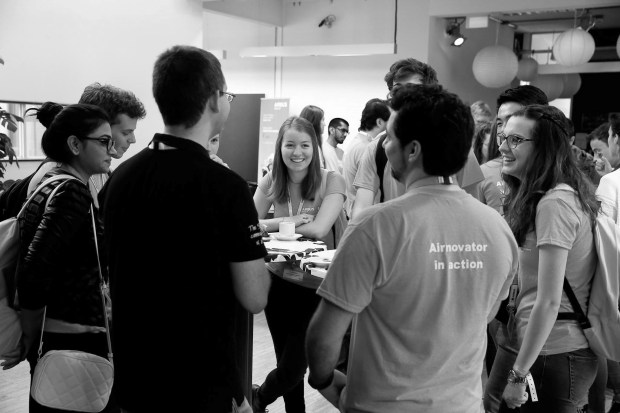
Airbus Airnovation Summer Academy, 2016
It’s also important to have good role models, people you can identify with and look up to, who make you think ‘I could do what they’re doing’. When you continually see grey haired white men in senior leadership positions, it can be hard to envisage career goals for yourself. Last week I attended a talk by Katherine Bennett CBE, who is currently the Senior Vice President of Airbus in the UK. It was fascinating to hear her own experiences and her varied career path to date. Interestingly, like myself, she attended an all-girls school – so never built any misconceptions about the types of careers a woman could have, or ever felt outnumbered in Maths and Physics lessons.
I was fortunate to have a female tutor at university, Lucy Berthoud, who encouraged me to apply for summer schools with ESA and Airbus, which broadened my mind to the wide-ranging and exciting applications of engineering. Notably I remember her demonstrating rocket propulsion in a space lecture – by donning a bike helmet, knee pads and elbow pads, and using a fire extinguisher to propel herself across the front of the room on a skateboard!
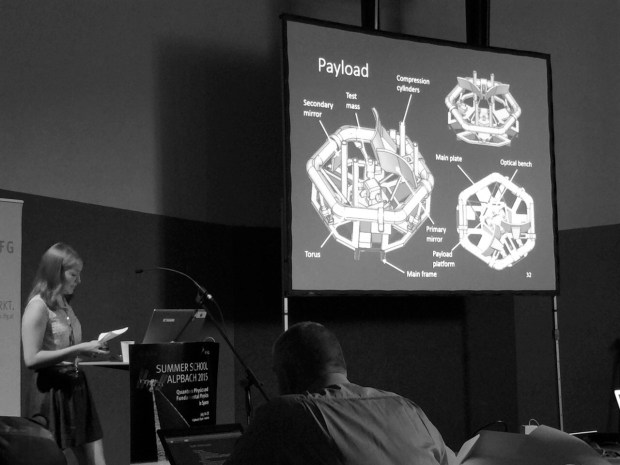
Alpbach Summer School, 2015
From my own experiences I’ve observed the large amount of terminology biased to the word ‘man’ when actually it means both men and women, and how it’s heavily ingrained into routine vocabulary. I recall a meeting where the growing team size was being discussed, and it was all ‘how many men’, ‘man hours’ and ‘manning’ where you could just as easily refer to ‘people’ or ‘resource’ or ‘workforce’. Sometimes someone realises, and consciously changes their word choice, but I’d bet good money that they’d be less likely to do that if there were no women in the room. It’s such a hard balance to strike – I don’t want to hear biased terminology but equally it sometimes feels embarrassing if someone only makes an effort because you’re in the room.
When in casual conversation with someone new, especially someone not in my industry, and I tell them I’m an aerospace engineer, most of the time they’ll be amazed at this or even say ‘well done’ or ‘we need more people like you’. I get that on one hand it’s a more interesting job title than others, however frequently the emphasis is on the fact I’m a woman who’s chosen this career path. I’d love for one day for it not to be met with such an amazed reaction – as if it was totally normal and ordinary for a woman to be an engineer.
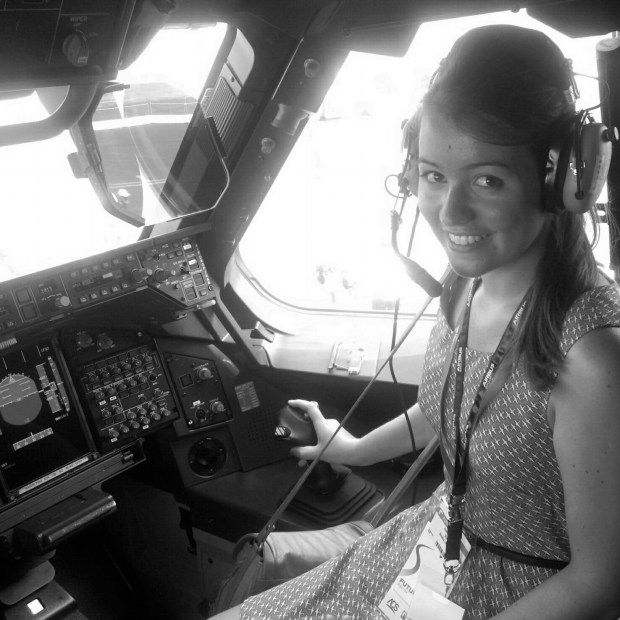
Farnborough Airshow
I could easily write many more paragraphs on this topic. However I wanted to highlight that we shouldn’t accept the male-dominated nature of engineering as the norm, and instead challenge it and take positive action, bearing in mind that big changes don’t happen overnight, but that even small changes can help make a difference
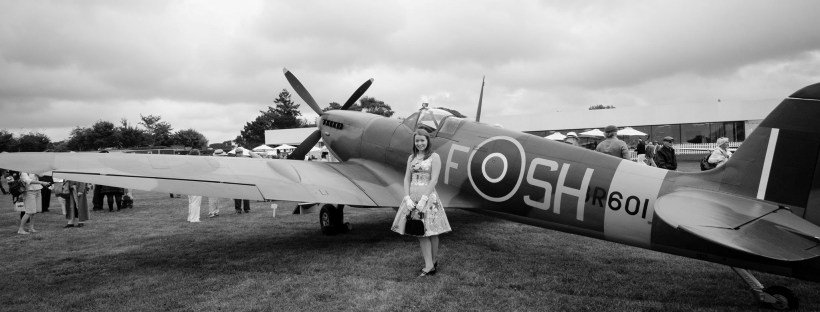
Lastly, regarding the feature photo at the top of this blog post (taken at Goodwood Revival) – the irony is that I would’ve had a totally different experience becoming an aerospace engineer during the golden age of flight in the 1920s or the 1950s. There’s a good chance I’d have chosen a different career altogether, and I wonder what it would’ve been.
Has International Women’s Day made you question anything or think differently?
Alexa
 ALEXA ELIZABETH