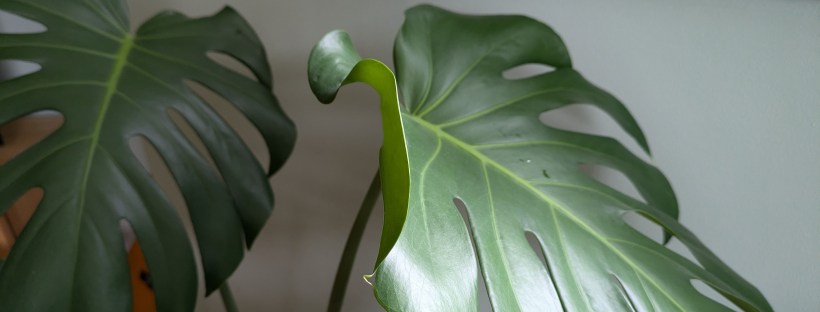
A house without plants is a very sad house in my opinion. They really add life and warmth to a space. Many people have the misconception that plants can be difficult to look after – I used to feel exactly the same way! Whether you’re completely new to plant parenthood or looking to brush up on basic plant care, I’ve written some top tips along with six easy-to-look-after plants I would recommend to anyone.
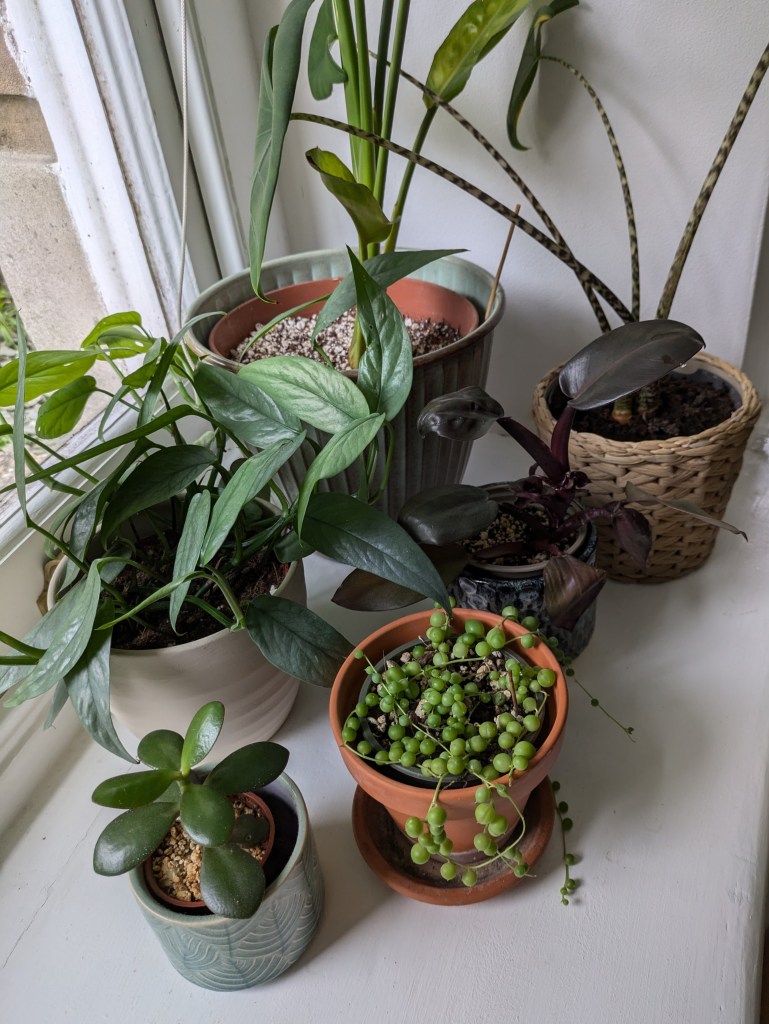
Six Key Plant Care Tips
- Frequency of watering. People often ask, how regularly do I need to water this plant? This is actually not something we can easily quantify and it’s worth shifting your mindset. The simplest answer is when the soil is dry. For some plants, the soil can be left to fully dry out before watering, whereas others prefer to always have moist soil. Feel how dry the soil is by poking your finger in up to the first knuckle – if it comes out clean then it’s dry and needs watering! Plants will require more water in the summer months and less during winter due to the changes in the light they receive.
- Dry soil. If the soil ever becomes too dry and has clumped together, it’s important to aerate the soil before watering, otherwise the water will run around the edges and not reach the roots. Take a kitchen skewer or similar, and gently create a few holes in the soil before watering.
- Drainage. Plants require good drainage to avoid problems such as root rot. Plants should be placed in a plastic pot with holes in the bottom, before being placed in a larger decorative pot. An air gap between the two pots is beneficial too.
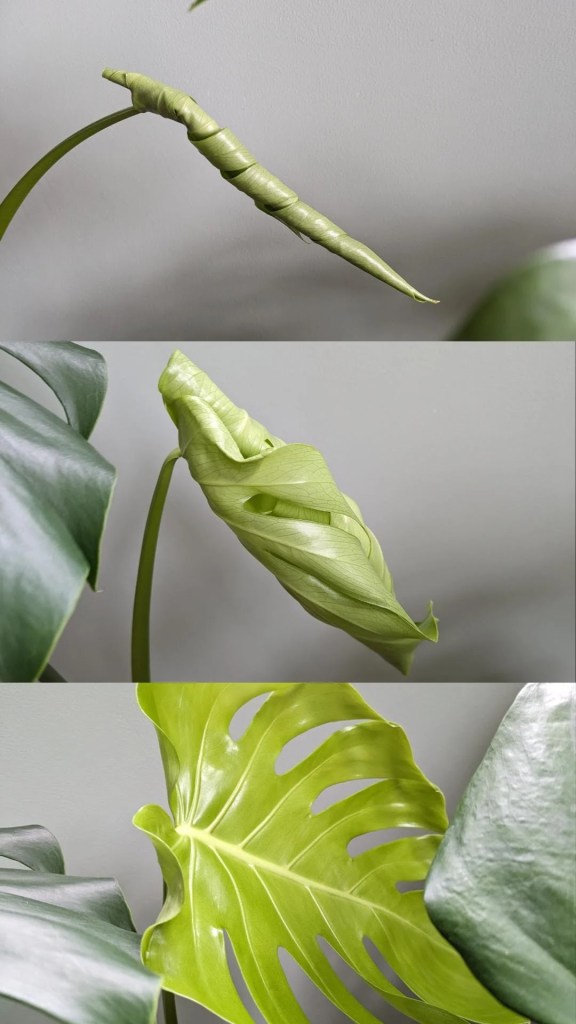
Monstera
- How to water. Lift the plant out of its outer pot and place it in a sink or on a tray. Generously water from above, making sure to water over all of the soil, and wait for the excess water to drain out of the bottom. Return the plant to its pot. If the pot has extra water after watering, make sure to tip it out, as sitting in excess water for a long time can be damaging for the plant. Some plants enjoy watering from underneath, by placing them into a dish full of water and allowing the roots to soak up as much water as they need. Again, don’t let them sit in excess water once the soil is fully wet.
- Light is equally as important as water. Some plants such as cacti thrive in a sunny windowsill with direct light, whereas others prefer indirect light. Ask the shop if you’re unsure.
- New plant. When you bring a new plant into your home, it will have an adjustment period as it gets used to its new environment. For example, don’t panic if it sheds a lot of leaves in the first month or two. It will likely grow new leaves that might be a different size to better suit the conditions available.
Advanced Plant Care
Once you’ve mastered the basics above you may be looking to expand your plant care skills further, for which I’ve written the following advice:
- Propagation. Propagating your plants is a really fun part of plant ownership and can be a lovely way to create gifts for friends. Some plants produce offshoots of their own accord, others you’ll need to take a cutting. Ensure each cutting has a few nodes on it (where leaves grow from) as this is where the roots will form. Place cuttings into water, removing any leaves that are below the waterline. Wait a couple of weeks until the roots have formed before planting into soil. This applies to leafy green plants – cacti and succulents operate differently. With many succulents you can simply remove a leaf and rest it on top of some soil, then watch it form roots and grow!
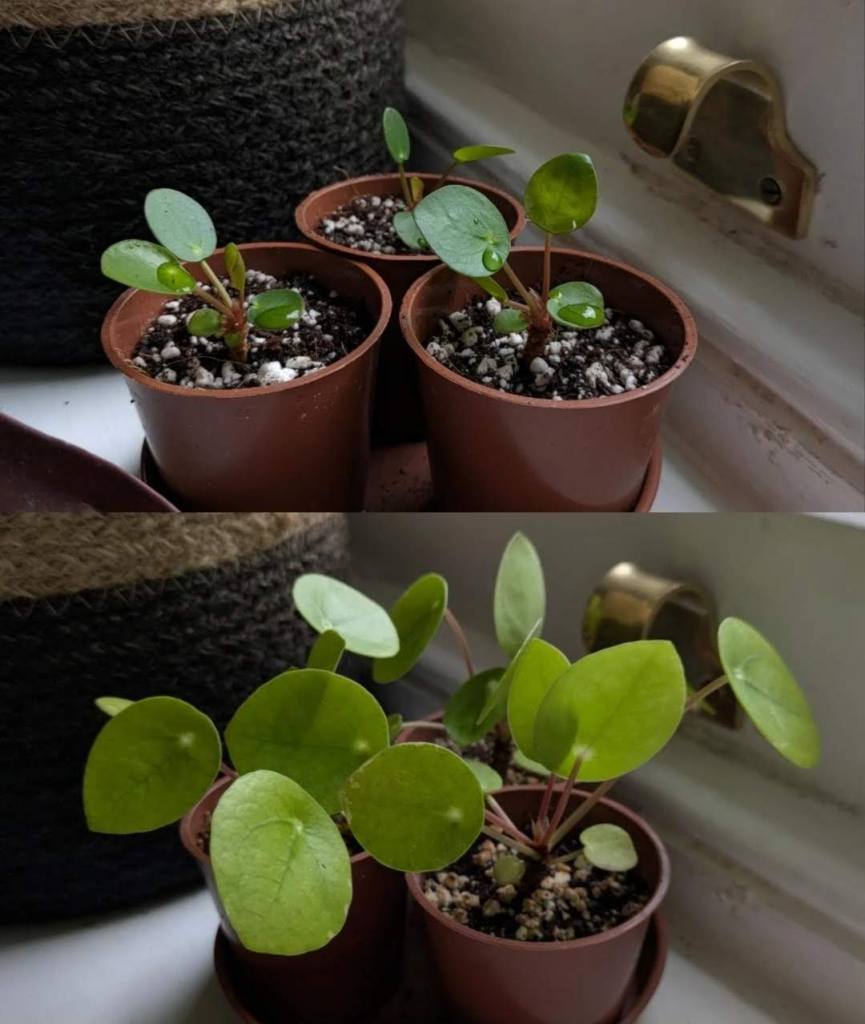
Chinese Money Plant Propagation (3 months of growth)
- Variegated plants have a mix of white and green colouring on the leaves. The white areas can’t photosynthesise so these plants will need plenty of sunlight and attention. They’re usually more expensive too as they’re seen to be more desirable.
- Soil types. Different plants benefit from different types of soil and blending the soil with other components. The plant shop Sprouts in Bristol stocks Soil Ninja, who offer a great standard houseplant blend which is suitable for most leafy green plants and includes perlite for aeration. Cacti will prefer soil blended with sand or grit, and orchids prefer a specialist orchid bark. You can also buy clay granules to place in the bottom of a pot before filling up with soil, to assist with drainage.
- Pests and disease. Inevitably you will experience pests or disease on your plants at one time or another. Some have no adverse effects (such as fungus gnats) but others can damage the plant (eg spider mites). Make you regularly inspect your plants closely including the underside of the leaves. Most situations can be rescued by isolating the plant and using insect spray. For spider mites, apply some water and washing up liquid to a cloth and wipe down the leaves. Isolate a new plant for a few days if you’re worried, ensuring it still has plenty of light.
- Repotting. Routinely check the underside of your pot to see whether any roots have started growing out of the pot – this is a clear sign to repot! Avoid repotting during winter. Repot into a slightly larger pot (avoid a really big size change), removing as much old soil as possible . Some plants don’t mind being root bound but for others it can affect them negatively. Cacti grow much slower than leafy green plants and so need repotting much less frequently.
Six Easy-care Plants
- Philodendron – lovely trailing leaves, ideal for draping over shelves. There are lots of different varieties.
- Chinese Money Plant (Pilea Peperomioides) – established plants will produce ‘pups’ which you can easily propagate into new pots.
- Umbrella Plant (Schefflera) – great for adding greenery to your space and very low-maintenance.
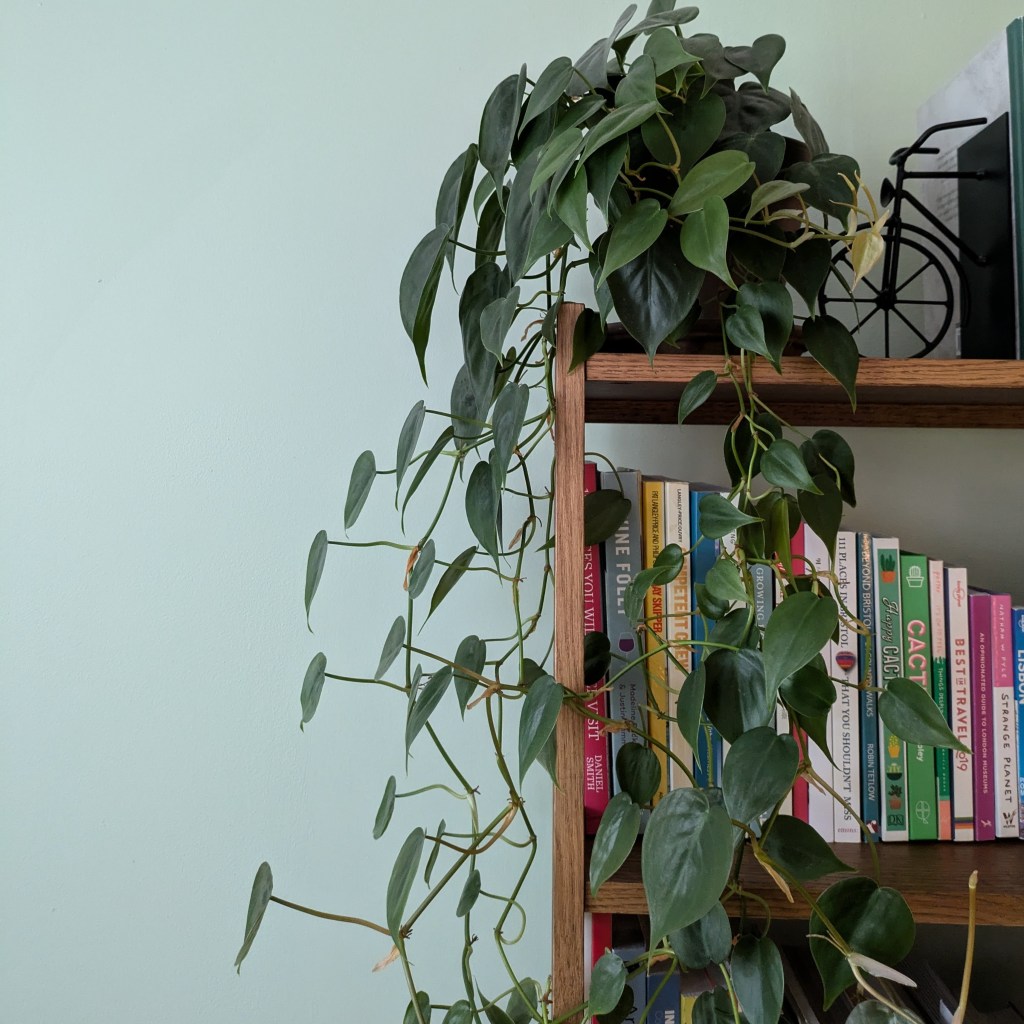
Philodendron
- Fishbone cactus – I love plants with interesting shapes, and the wiggly leaf-like stems of this one are really striking. Cacti in general need less attention than leafy plants.
- Swiss Cheese Plant (Monstera) – there’s a reason this is such a popular plant, with its beautiful fenestrated leaves and robust nature. They will keep on growing if you keep repotting, so make sure you’ve got plenty of space!
- ZZ plant (Zanzibar Gem) – another larger plant, I think the red variety is particularly lovely and makes for good visual contrast amongst other green plants.
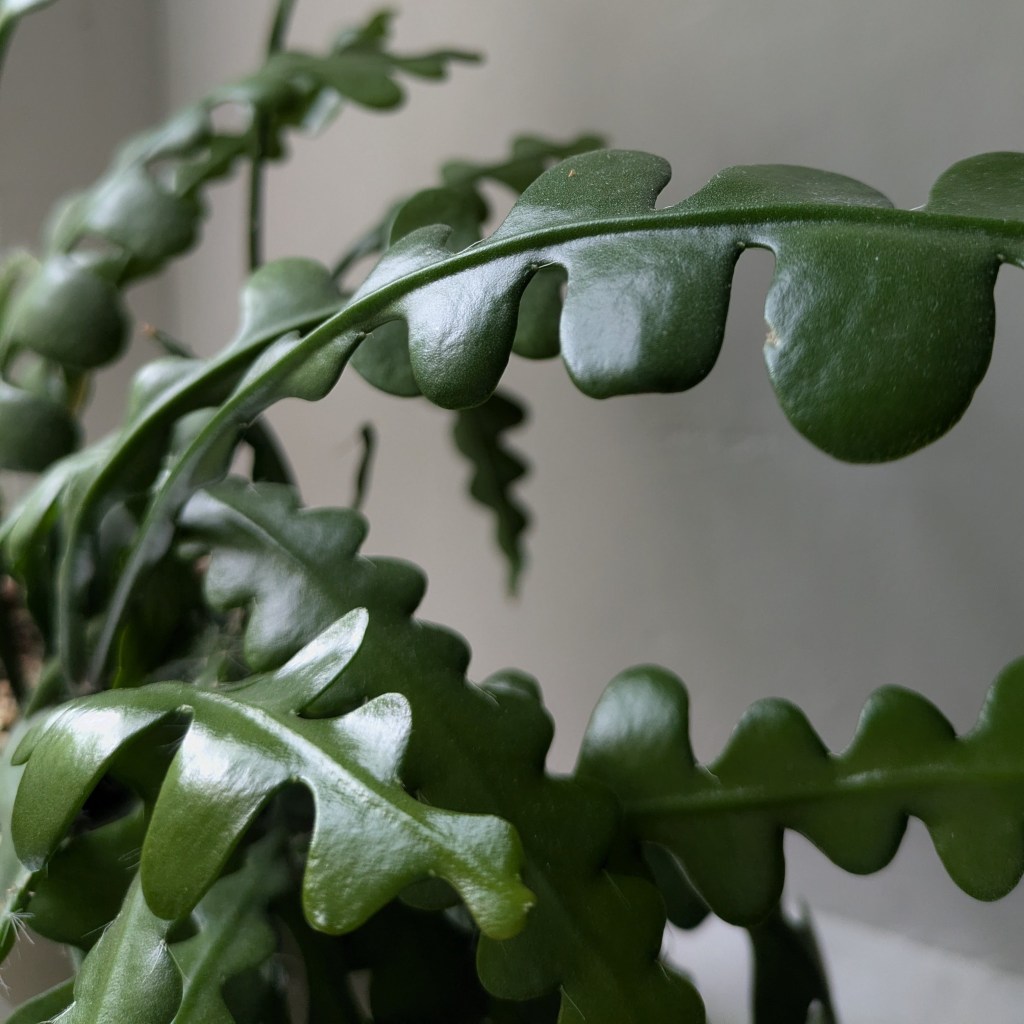
Fishbone Cactus
If you’re in the market for a new plant, as always it’s lovely to support independent shops if you can. Some favourite Bristol shops include Sprouts, Wild Leaf and Mint Plants. The employees are usually very knowledgeable too if you have any plant-related queries! Having said that, I’ve also found more than one bargain in B&Q in the past.
Happy growing!
Alexa
P.S If you enjoyed reading this, why not take a look at 2024 Top Ten Book Recommendations, My 5 Favourite Baking Recipes and Vintage Furniture Finds.
Header photo: Monstera
 ALEXA ELIZABETH