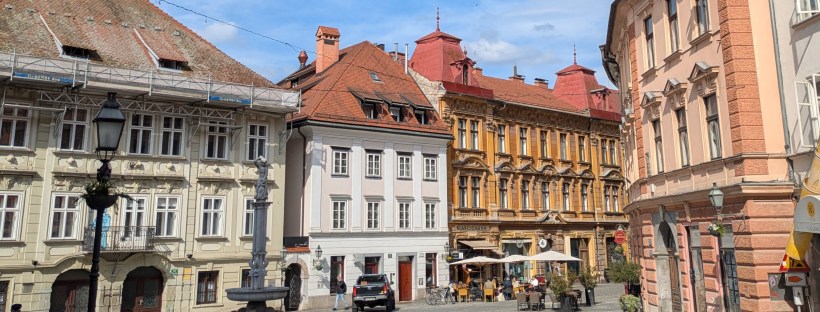
Earlier this year I booked 3 months off work to travel, something I’d dreamed about doing for many years. I started my time off with 3 and a half weeks in Sri Lanka, which you can read about here. I then returned to Bristol for several days before beginning my next travel adventure: 6 weeks in Europe!
I had a few ideas of places I wanted to visit, and when I located them on a map they formed a natural route to follow. I’d start in Albania (with a very cheap flight from Bristol!) and make my way up the Adriatic Coast through Montenegro, Croatia and Slovenia, before heading all the way down through Italy. I’m going to write about exploring the Western Balkans in this blog post and then cover my time in Italy in future posts.
While researching my trip, I realised that as I’d be travelling in low season during March, and not in the peak summer months, there’d be fewer buses running in the Balkans, so I’d need to carefully plan my transport to not end up stranded anywhere. Buses are more convenient than trains once you’re south of Slovenia, as there’s no well-developed rail network unlike most of Europe. I did end up booking all my transport and accommodation in advance – had my trip been any longer I probably would’ve done some of the planning while abroad, although I did book onto various day trips and tours while I was out there.

Dubrovnik
Albania
Arriving in Albania I was reminded of how much I enjoy exploring a completely new place – the first time you walk along unfamiliar streets, getting your first impressions and feel of somewhere, experiencing feelings of possibility and adventure. I landed at Tirana airport and it was a straightforward bus ride into the centre of Albania’s capital city, followed by a sunny walk to my hostel. In the evening I enjoyed some delicious meatballs and flatbread at restaurant Piceri Era Blloku, and happily sat reading my book a while. The next day I visited the Bunk’Art 2 museum, set within an old Cold War underground bunker, and it was very enlightening to learn more about the communist era, which only ended in 1990 in Albania. Another time I’d like to visit the Bunk’Art 1 museum on the outskirts of the city, which is larger and covers a broader historical period. I walked around the city some more and then to dodge the rain I spent some time in a café researching and booking a few day trips for later in my travels.
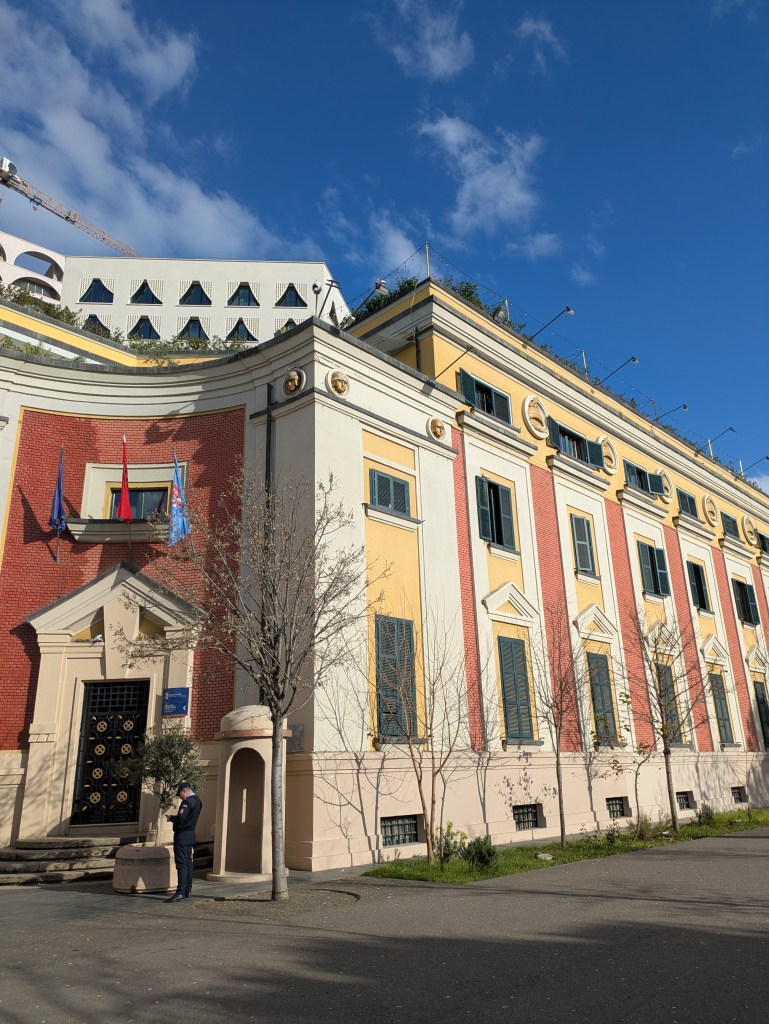
Tirana
The next day I headed out into the countryside on a small tour, passing through the outskirts of the city and then along some bumpy tracks up into the hills. We stopped at a stunning gorge then did a short hike up to a viewpoint with beautiful views of Bovilla Lake, which is actually a reservoir providing the tap water for Tirana (not that you can tell!). In the evening I watched the sunset from the Pyramid of Tirana, a striking brutalist symbol of the city’s communist past which has been turned into a joyful, colourful educational hub and public meeting point.
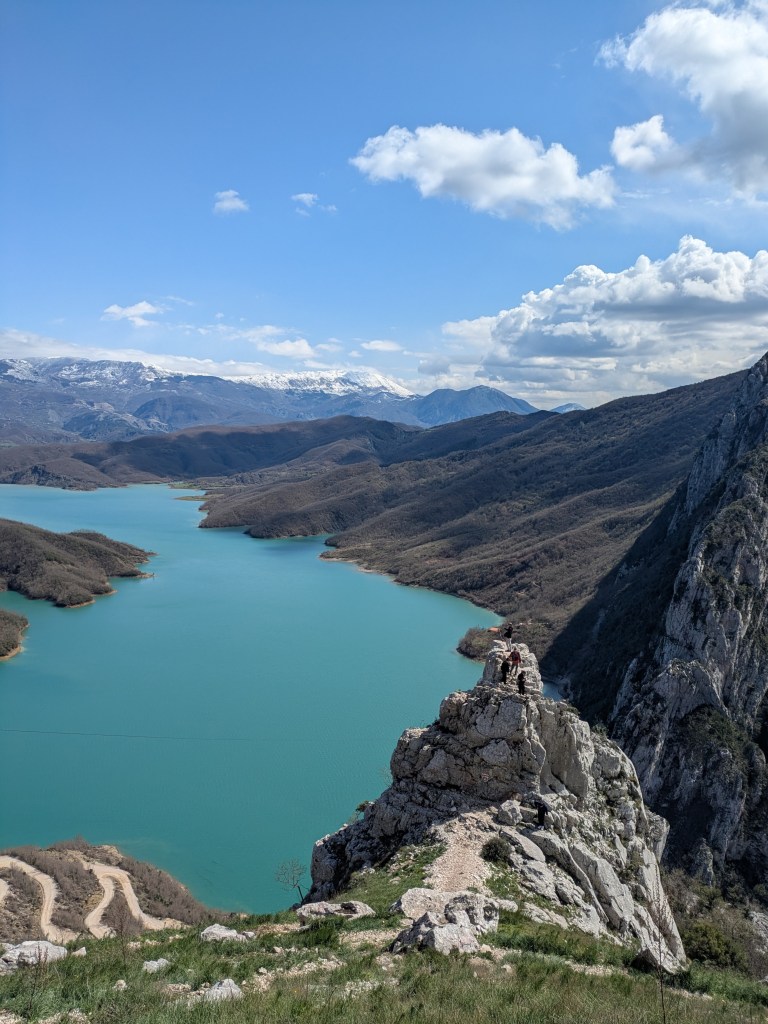
Bovilla Lake
Three nights in Tirana only gave me a small flavour of Albania – there’s so much more to explore! It’s much less developed for tourists compared to other parts of Europe that I’ve been to, though this means the food is very cheap. Euros are widely used in Albania although the official currency is the Albanian Leke – on one occasion I paid for a hot drink in euros and received the change in Leke! I had to purchase separate travel insurance and an eSim for my visit as the country isn’t covered on most European travel and phone policies. The beaches in the south of Albania are becoming increasingly popular as a cheap summer Mediterranean destination (something I’d like to investigate myself!), although until a proposed new airport is built in the area your best bet is to fly into Corfu and take a short ferry across.
Montenegro
On this occasion Montenegro was a stopping point to break up my journey between Albania and Croatia, and I’d love to return to explore more of it. I visited previously for a long weekend in the spring of 2024 and really enjoyed exploring the Bay of Kotor, with its pretty waterfront villages set amongst a striking mountainous backdrop. It was quite a long bus journey from Tirana to Kotor of 5 and a half hours including stops, but I enjoyed taking in the scenery and listening to podcasts. I stayed a night in the gorgeous Hostel Centruum, located in the heart of the old town, which features exposed stone walls and private curtains around each dorm bed. I had a lovely wander around the beautiful old town, soaked up the sunshine by the marina, and even found a quiet street for some sketching. I spent the evening chatting in the cosy hostel living room with a lovely French woman, a musical American man and the friendly Montenegrin owner of the hostel. It was exactly the kind of peaceful, social evening I’d hoped I would experience when planning my trip.
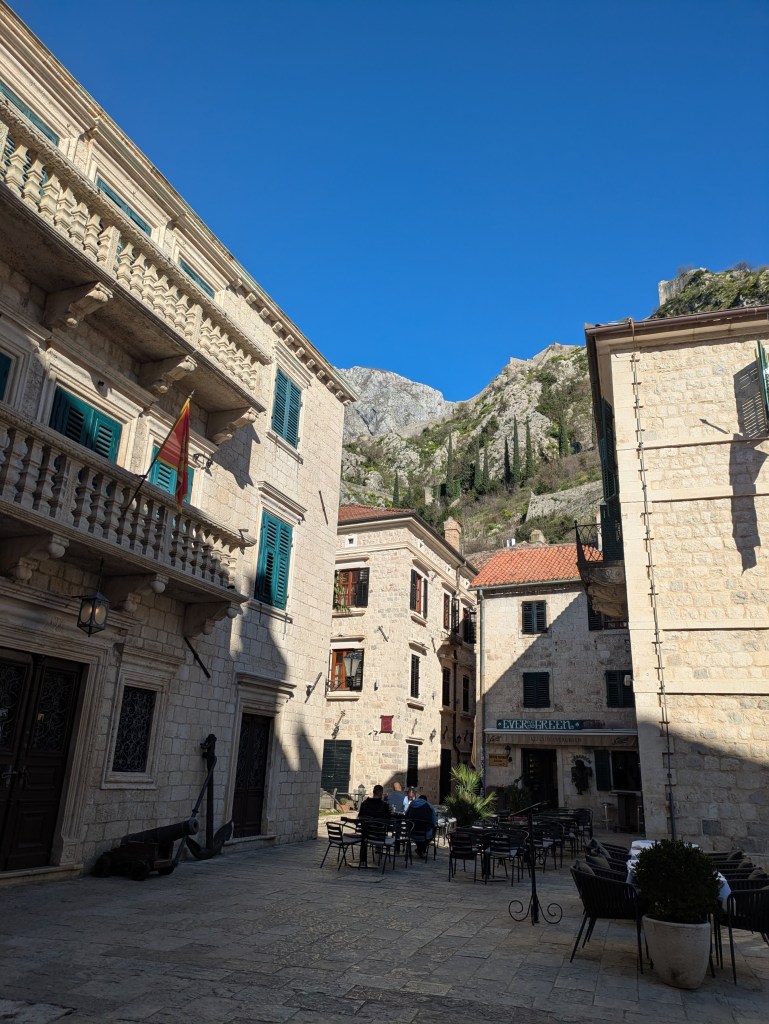
Kotor
Croatia
Another bus carried me further north into Croatia, after some lovely scenic views around the Bay of Kotor. My first glimpse of the old town of Dubrovnik from up on the hillside was magical, and it felt even more magical when I finally stepped foot in the beautiful old town. After some peaceful reading on a sunny bench by the old harbour, I treated myself to some delicious homemade pasta with fresh swordfish at the charming Trattoria Carmen for dinner. The next day I walked along the city walls in the sunshine (and dreaded to imagine how hot and busy this would be in the height of the summer!), admiring the beautiful terracotta rooves across the city and the sparkling turquoise water. I also explored the Foundry museum and the Lovrjenac fortress which are both included in the city walls ticket, the latter of which providing striking views of the old town enclosed within its walls. I later found time for some more sketching in the sunshine too – what a delightful day!
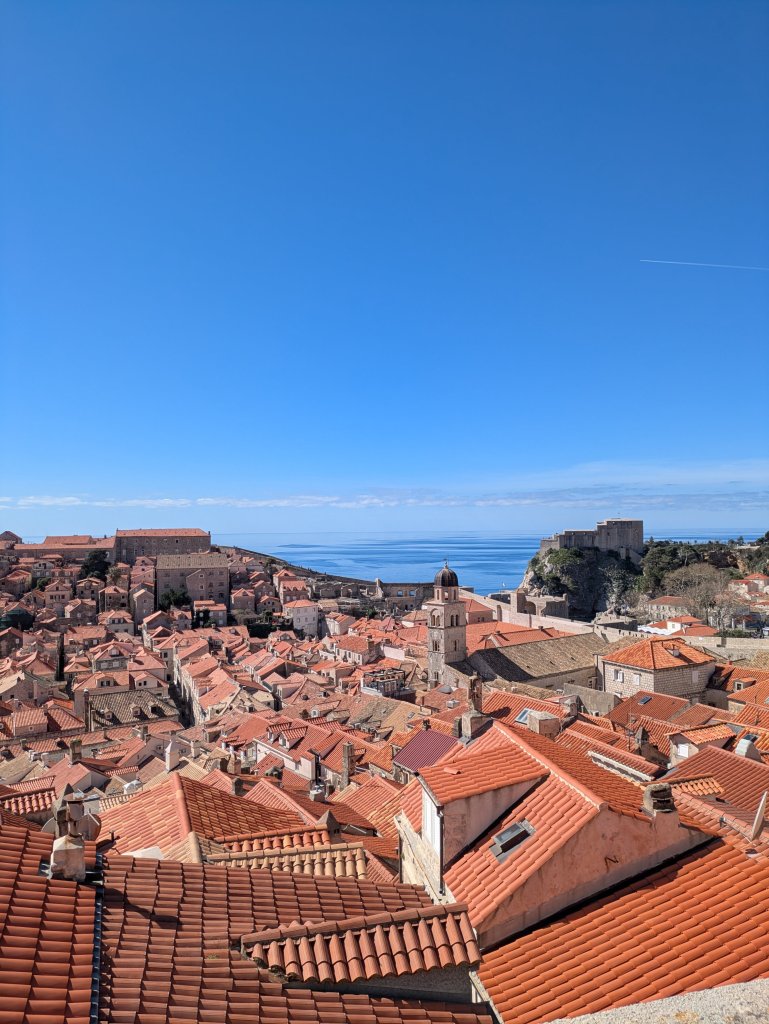
Dubrovnik
From Dubrovnik I took a bus to Split, and after a full week of exploring I enjoyed some downtime reading in the hostel. I knew that I didn’t need to feel guilty for not filling every waking moment with sightseeing, due to being abroad for a longer time than a typical holiday. The hostel had a ‘social hour’ each day and it was fun to play some games with travellers from Canada, France, Australia and America. Less fun was fact that the small, fully occupied 6-bed female dorm I stayed in had stuff scattered everywhere by the other occupants – a real contrast to all the other dorms I stayed in, which were generally neat and tidy.
I explored the old town of Split and the Diocletian’s Palace, an ancient Roman complex that’s become fully integrated into the town and is free to explore (aside from some paid museums). I enjoyed eating traditional Pašticada, a Dalmatian beef stew served with gnocchi, at the lovely bistro Ka’doma, a neighbourhood spot hidden away from the main touristy areas.
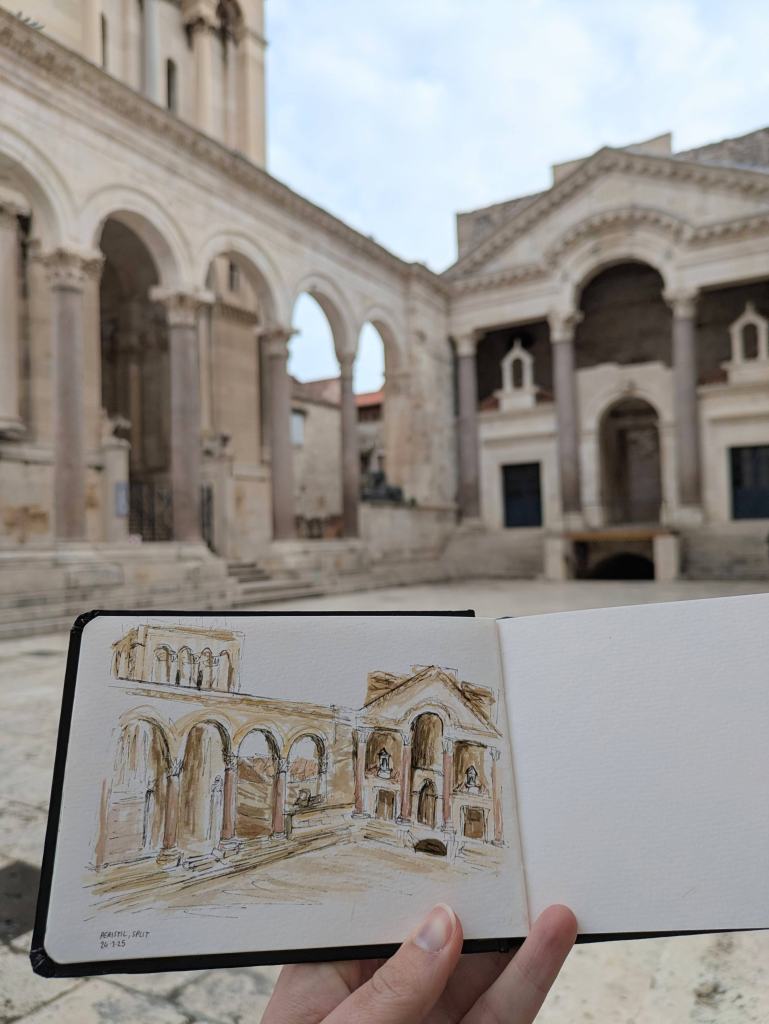
Sketching in the Diocletian’s Palace (see more at @alexaholroydart)
My planned day trip to Krka National Park was cancelled at short notice, and after struggling to find another one to book I ended up hiring a car for the day! It was my first time doing an extended amount of European driving (on the other side of the road to the UK) but I got the hang of it fairly quickly with a bit of extra concentration, and I felt quite proud of myself! The park was gorgeous with lots of boardwalks across the rivers, and it felt lovely to be immersed in nature after so much time in urban areas. The waterfalls were stunning and the park was lovely and quiet. I’d love to return to Croatia to visit Plitvice Lakes National Park which looks beautiful too, and also to explore some of the islands.
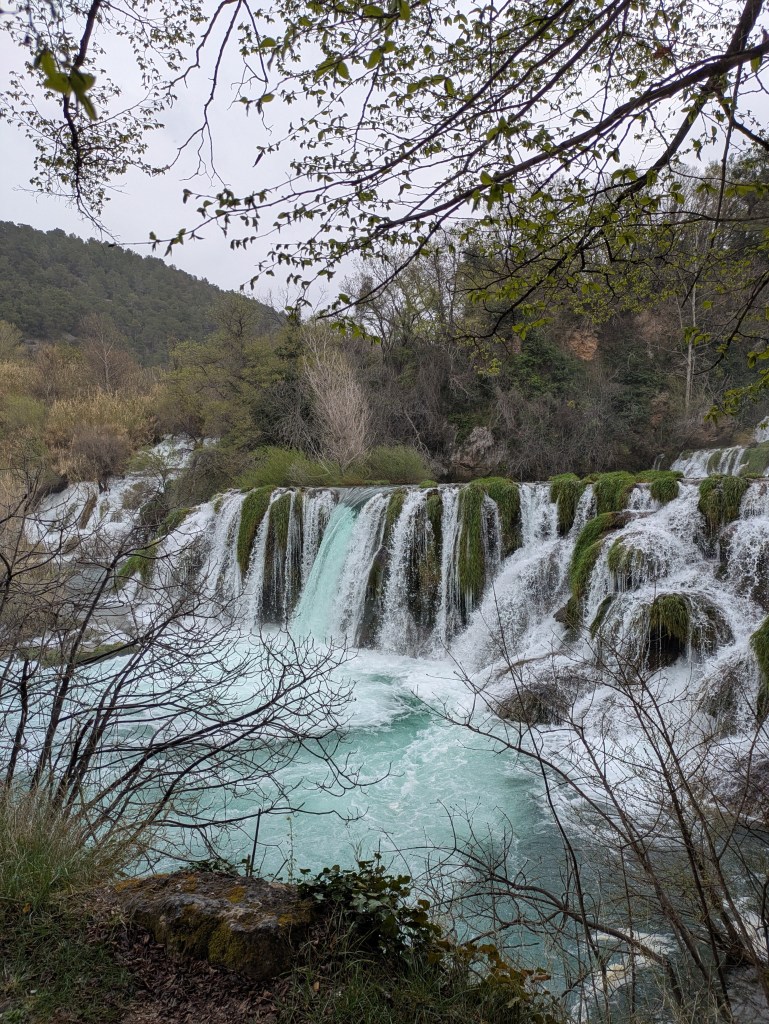
Krka National Park
I took a bus from Split to Zagreb and stayed there a night to break up my journey to Slovenia, and enjoyed walking around Croatia’s capital city and admiring the old architecture. It’s definitely somewhere that would make a great city break weekend.
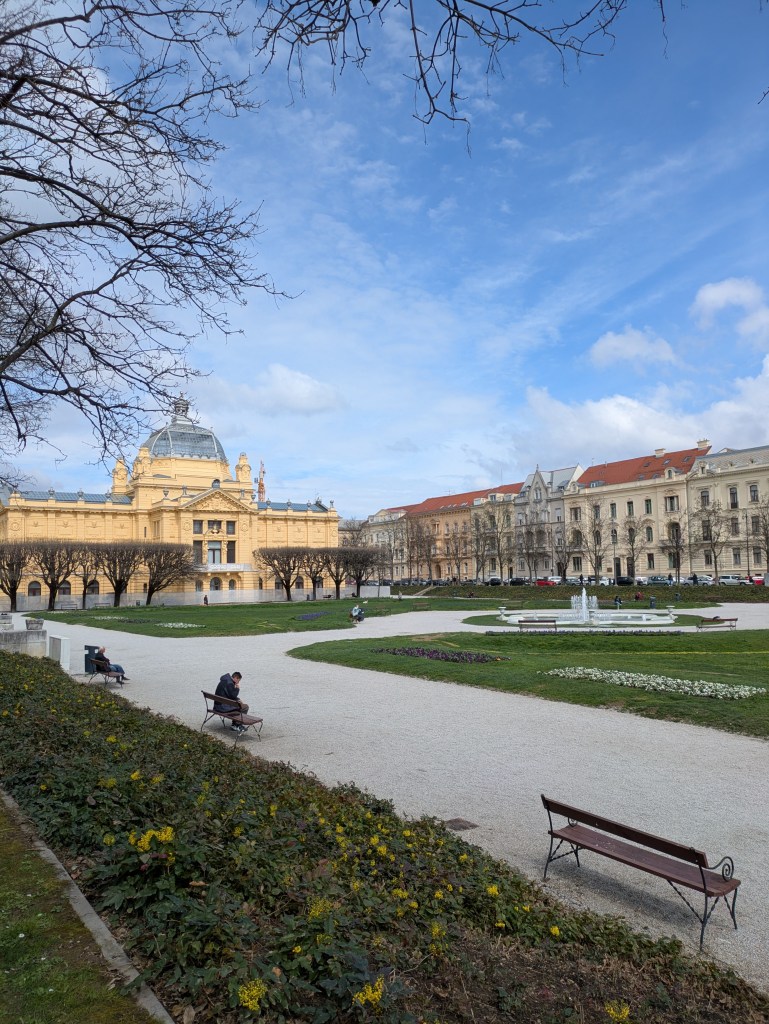
Zagreb
Slovenia
My first train of the trip took me from Zagreb to Ljubljana, the capital of Slovenia, and I enjoyed having a whole compartment to myself as I soaked up the views of farmland and pretty churches. A scenic walk along the river led me to the chilled AdHoc hostel, located centrally in the old town. It’s always so interesting meeting people from other countries and comparing experiences, and in the communal area I chatted to people from Germany, the Netherlands and Colombia.
I joined a delightful free walking tour of the city – you can find these in most cities, it’s such a great way to learn more about the place, and you can choose to tip the guide at the end. It was interesting to see both the Austrian Art Nouveau and Italian Baroque influences on the architecture – Slovenia only gained independence in 1991. The architect Jože Plečnik had a major role in the urban planning and design of the city, and was ahead of his time when it came to creating connections to nature within it, along with his use of squares and public space to encourage social interaction between residents.
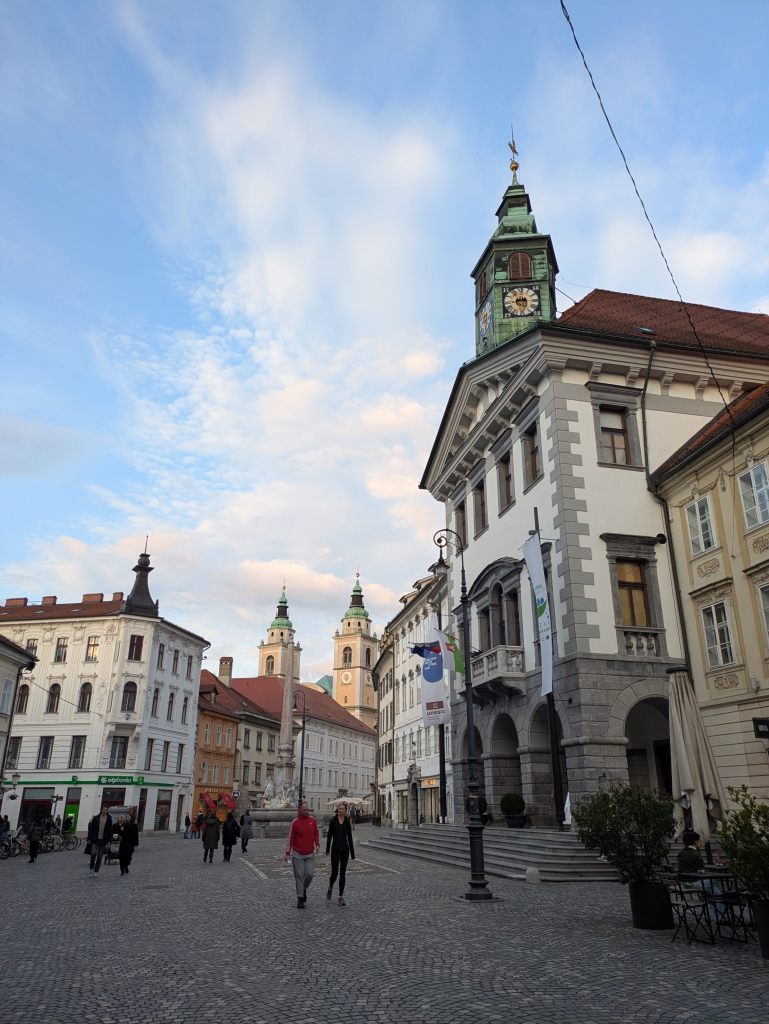
Ljubljana
I took the small funicular up to the castle to enjoy the views over the city – the beautiful terracotta rooves of the old town along the river, alongside the modern areas stretching towards the countryside and hills in the distance. I had a delicious dinner at Supernatural, a cosy wine bar serving fresh, locally-sourced food.
The next day I headed out of the city on a tour to Lake Bled, and enjoyed a calming walk along the water’s edge. Electric boats run regularly to the tiny island in the centre of the lake (they’re cheaper than the traditional wooden Pletna boats), and while it was lovely to be on the water, there’s really not much to do on the island so don’t feel bad if you skip this out. In the afternoon I visited the National Art Gallery in Ljubljana, which had some lovely exhibitions featuring striking mountain scenes and impressionist paintings of Slovenia. I even stumbled across a charming potato statue outside the Modern Art Gallery, which much to my delight had some of the most amusing Google reviews I’ve ever read.
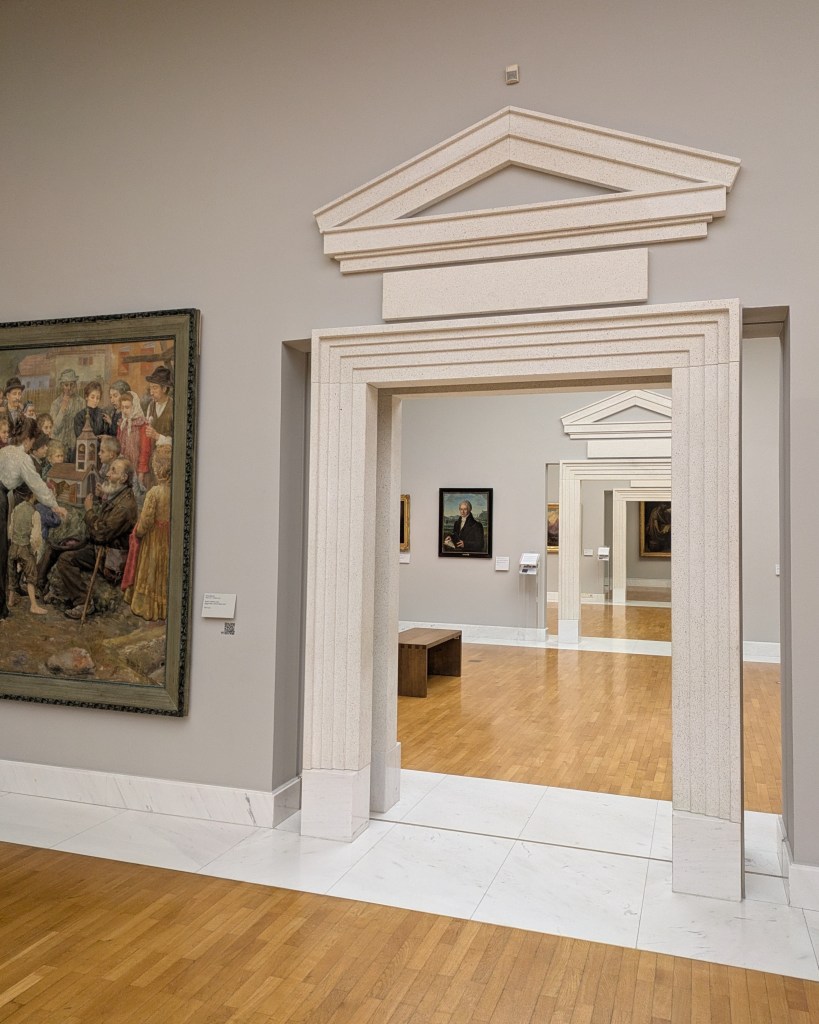
National Art Gallery, Ljubljana
Ljubljana quickly became one of my favourite places on this trip, with its beautiful historic centre, creative energy and the calming countryside surrounding it. Slovenia is a relatively small country and I’d love to return to explore more of it – which seems to be the case for all of these countries I’ve visited in the Western Balkans!
In the next part of my trip I venture into beautiful Italy. Have any of the places I’ve mentioned made it onto your travel wishlist?
Alexa
P.S. If you enjoyed reading this post, perhaps you’re even interested in doing some solo travel yourself, why not take a look at my Solo Travel Tips, Solo Trip to Porto and Sightseeing in Sri Lanka.
Header photo: Ljubljana, Slovenia
 ALEXA ELIZABETH