I’d dreamed of visiting Egypt for a really long time, possibly even since I first studied the Ancient Egyptians in Year 3 at school. It’s a part of history that has captivated many, but I’d pretty much written off visiting the country, having heard the tourist experience isn’t always the most pleasant, especially for female travellers. However after I did my first group tour in Sri Lanka in February last year, I realised that a small group tour would be a great way to explore Egypt, not only due to safety in numbers but also to be led by a local guide who would take care of all the logistics and provide useful guidance. I had a couple of weeks of annual leave available and no other plans, so before I could overthink it I booked the trip! Grab a brew and read on to hear about my time exploring Egypt.
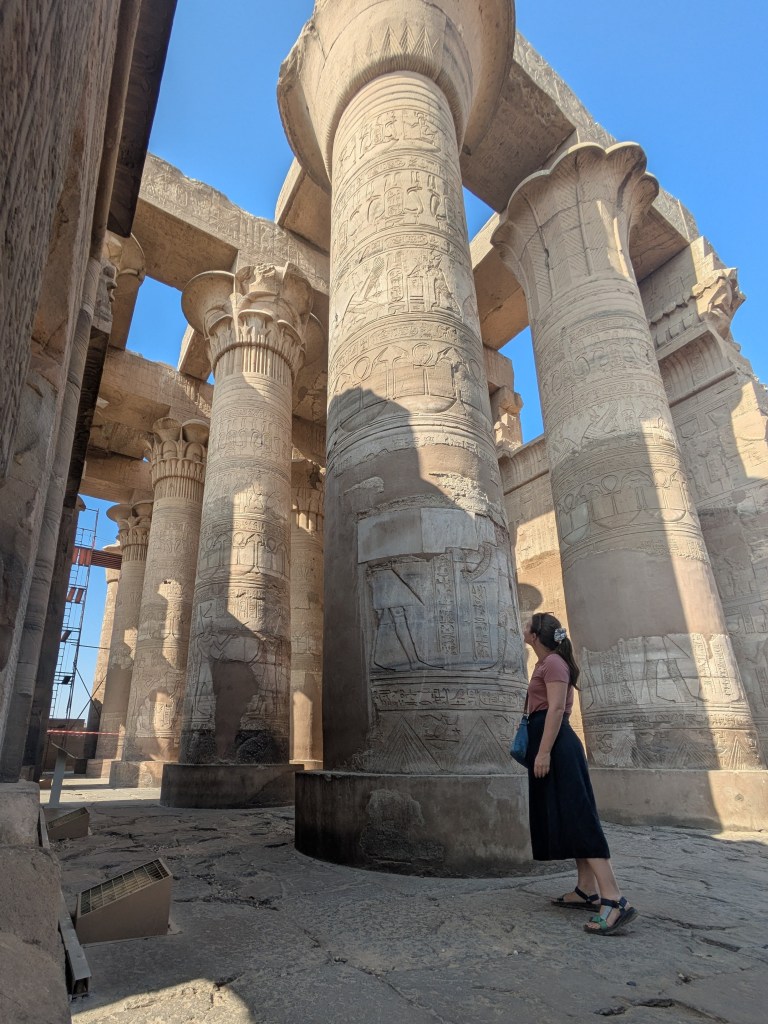
Kom Umbo temple
At the end of October I flew from London Heathrow to Cairo, a very manageable 5-hour flight (technically still short-haul so no in-flight entertainment service!). There’s only a 2-hour time difference between Egypt and the UK – the Australians and Americans on my tour were quite envious of both this and my short travel time! November to February is the peak season for visiting North Africa with cooler temperatures than the summer months, although with mid-afternoon temperatures in the early thirties it was still pretty hot! This meant that we often had early starts to explore the historic monuments before the heat became too intense, and to minimise the crowds.
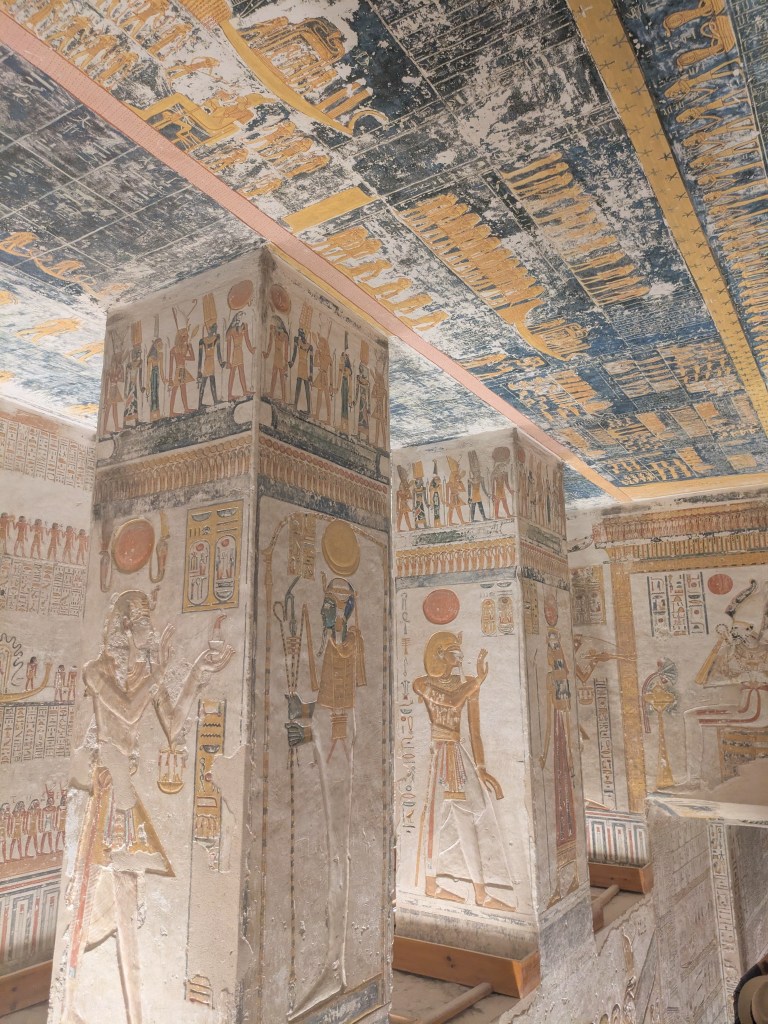
Valley of the Kings
I booked onto the G Adventures ‘Best of Egypt’ tour, one of several to the country that they offer. It covered all the major sights and fit into the time I had available. It has 6 full days of sightseeing, plus optional tours at the start and end which I also booked onto, giving me 8 full days of exploring (I was there for 9 nights in total). I also booked an airport pickup with G Adventures which was a seamless experience that I’d highly recommend – I was met prior to immigration, given my Visa and whisked through to baggage collection before being passed over to a driver to take me to the hotel in downtown Cairo.
On my first full day in Egypt I enjoyed an optional tour of Islamic and Coptic Cairo with two Australian female solo travellers who were both really lovely. We explored the magnificent Muhammed Ali Mosque (so large that I’d spotted it from the plane!) and admired the intricate Islamic designs. We also visited a synagogue and two churches including the Hanging Church, where through a few glass floor panels you can see how the floor is suspended high above an old Roman fortress. For lunch we sampled koshari, the delicious national dish consisting of rice, pasta, lentils, chickpeas, tomato sauce and garlic sauce. After some downtime at the hotel we met the rest of the 10-person group in the evening, and headed out for dinner.
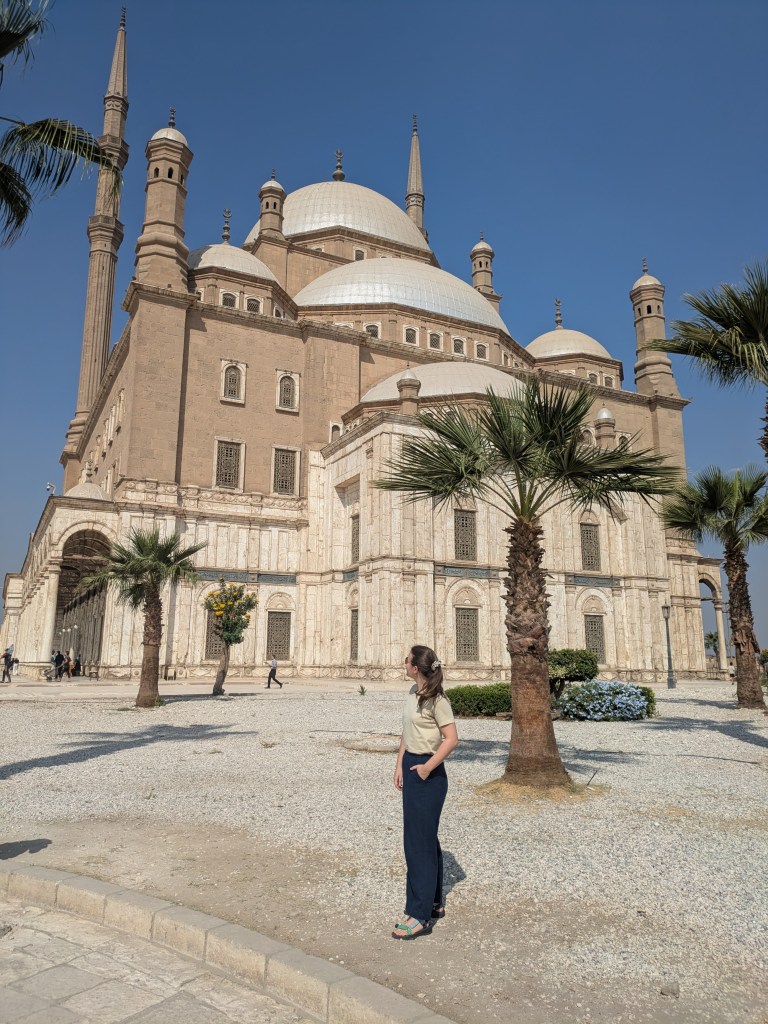
Muhammed Ali Mosque
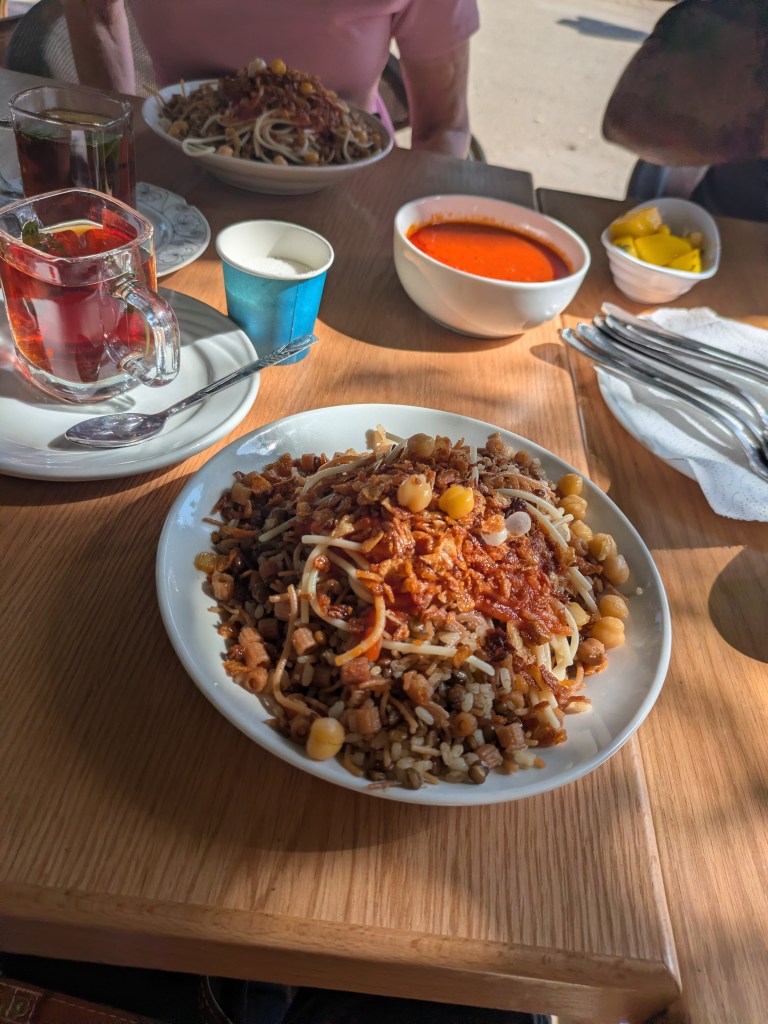
Koshari
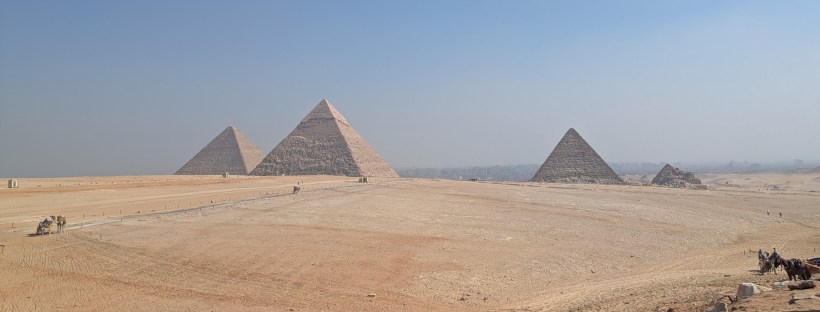
The next day we set off at 7am to see the Pyramids of Giza – a true bucket list item for me. They’d been hidden in the haze of the city the day before, so my first glimpse of them from the highway was very surreal, as if they’d been magically placed there. There was a smart new entrance to the site and free shuttle buses to take you around. The pyramids themselves had an otherworldly quality about them, you could sense how ancient they were. We visited the Pyramid of Khufu first, also known as the Great Pyramid of Giza, which is the tallest and oldest pyramid at this site and built from over 2 million blocks. I opted to go inside to see the granite tomb – it was very warm in there! We then walked round the Pyramid of Khafre which often appears taller due to its foundation being at a higher elevation. It’s wild that we still don’t know exactly how they were built, and how the Ancient Egyptians calculated the dimensions and proportions of these colossal structures so accurately that they’re still intact today. Next we saw the Great Sphinx up close, it was amazing to see such an iconic sight in person although the number of tourists was steadily increasing. We finished our visit by taking some great photos at the panoramic viewpoint. In the afternoon we visited the Egyptian Museum in Cairo where you could easily spend a whole day, though by this point we were all starting to flag after our big morning, and the old museum was rather busy, noisy and warm.
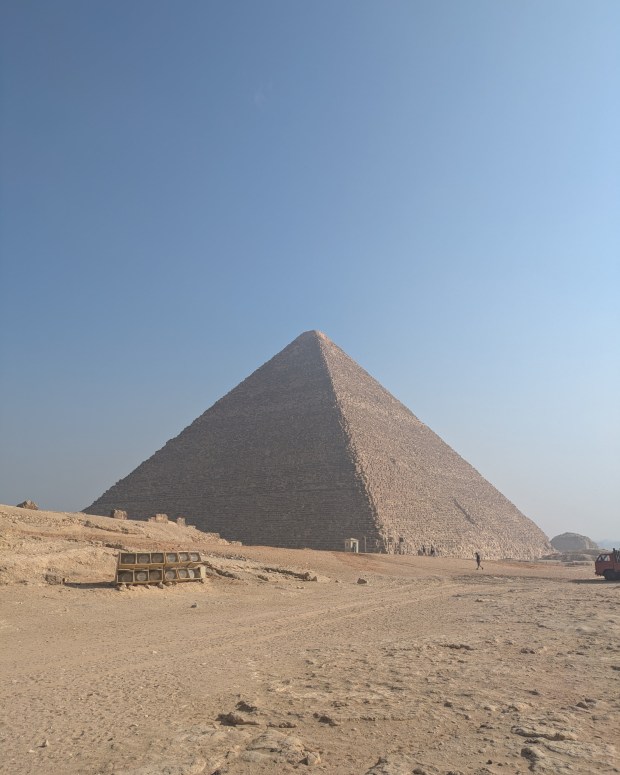
Pyramid of Khufu
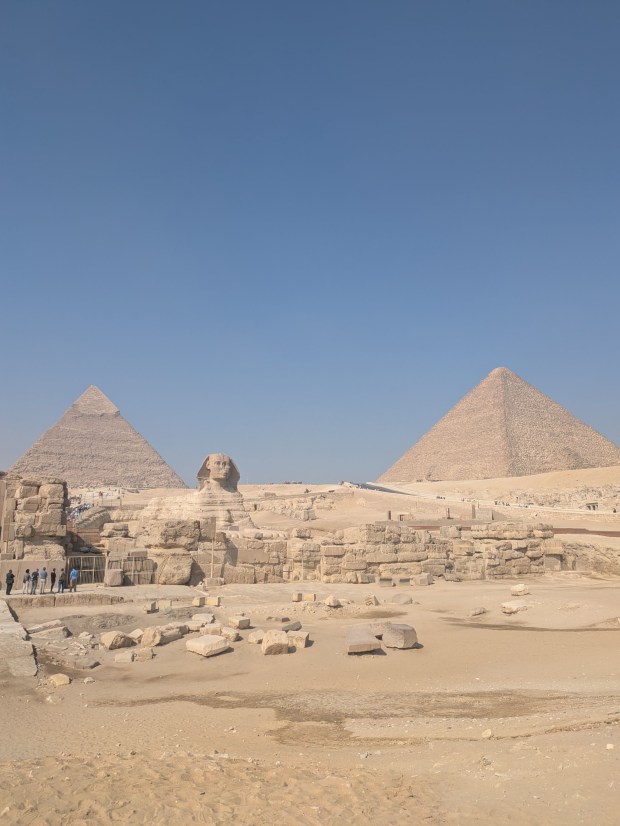
Pyramids of Giza
That evening we headed to the train station and boarded a train to head south to Aswan – my first overnight train experience! The train was on the older side but I was expecting this, and I had a cabin to myself which was a pleasant surprise. It was lovely to wake up and watch the changing scenery while still in bed. After arriving in Aswan we took a small motorboat on the Nile to reach the beautiful Philae temple. Amazingly the temple had been carefully relocated stone-by-stone by just a few hundred metres, to avoid it being flooded after a new dam was built. The temple was incredibly well preserved and nearly every surface was covered in hieroglyphics – things I would soon come to realise were consistent across all the temples we would be seeing. I was very grateful that we had our G Adventures guide to show us around and pick out significant details to explain the history.
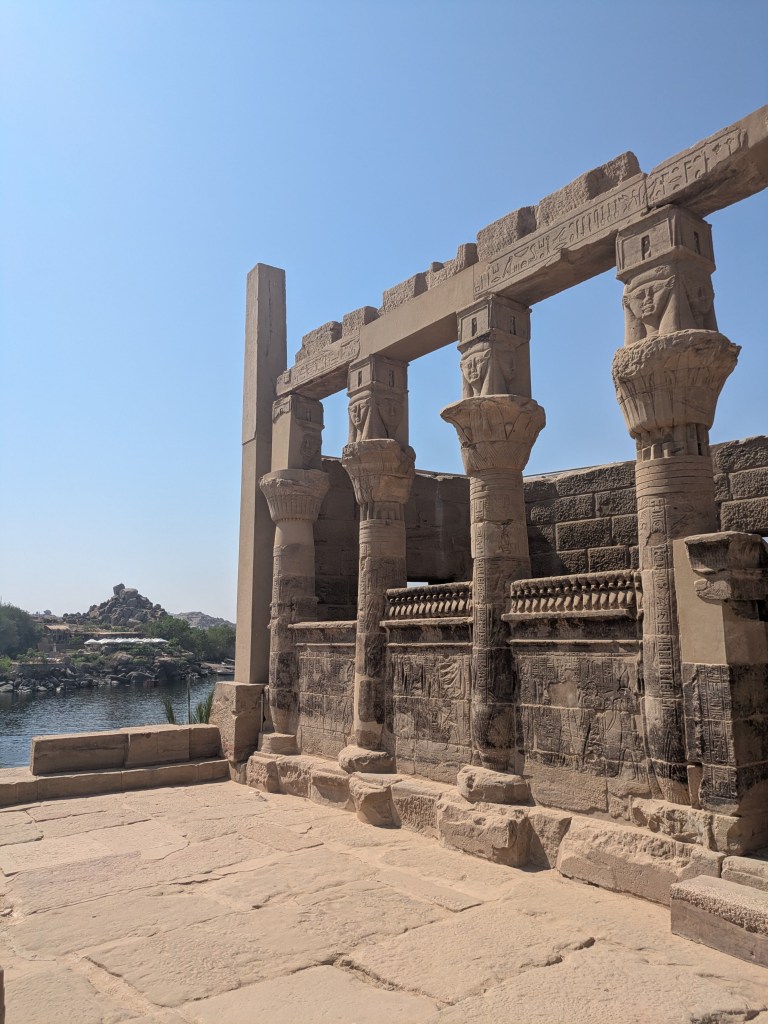
Philae temple
The following day we set off very early at 4.30am to drive 4 hours to Abu Simbel, where there are two temples with colossal statues carved into the rock, built by the Pharoh Ramses II for him and his wife. This was a very worthwhile optional day tour – I could’ve marvelled at the scale of the statues for hours on end. Similarly to the Philae temple we saw the previous day, these temples had also been painstakingly relocated in the 1960s which is an engineering marvel in itself. There were more statues inside and lots of hieroglyphics too (and also quite a lot of tourists). I was very glad I’d brought a handheld electric fan with me as it was quite warm inside. We headed back to Aswan and after dinner we wandered through the market. You can’t really look at anything for more than a second before someone will start trying to sell to you. There are also lots of vendors when you approach all the main tourist sights which can be quite relentless, although usually a firm ‘la shukran’ (‘no thank you’ in Arabic) will cease the harassment (until the next vendor spots you).
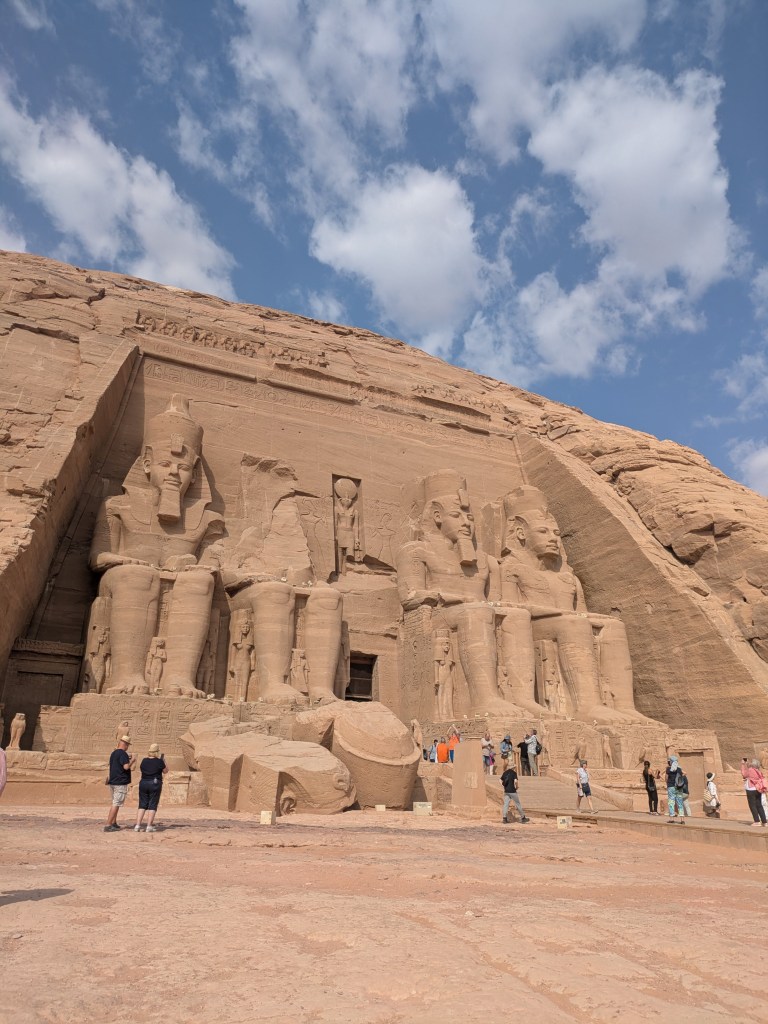
Abu Simbel
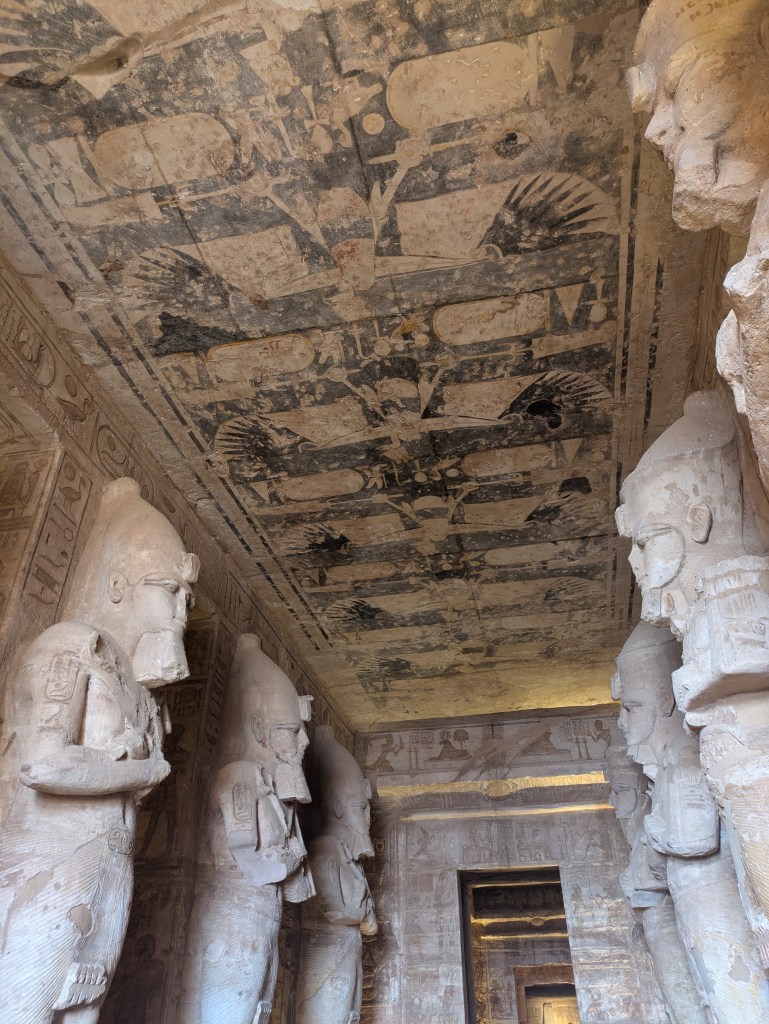
Abu Simbel
The next morning I had a delightful breakfast outside overlooking the river. Our accommodation in Aswan (Obelisk Nile Hotel) was my favourite of the three we stayed in, situated on the banks of the Nile, with rooms spread amongst gardens and an outdoor pool. From the hotel we boarded a felucca, a traditional sailing boat, and spent a very relaxing couple of hours cruising the river. The whole floor area was covered in cushions which was really comfortable, and it was lovely and cool to be in the shade with a gentle breeze coming off the water. One of my tourmates asked to listen to some current popular Egyptian music which was fun, it’s always interesting to find out what the locals listen to. After a stop for lunch we drove an hour to Kom Umbo temple and it was amazing to see some of the original colours (blue, white and red) still preserved. Some of the hieroglyphics showed surgical instruments and agricultural calendars, highlighting the impressive intellect of the Ancient Egyptians. There was also a small crocodile museum with 22 crocodile mummies, demonstrating their sacred significance for the Ancient Egyptians. Afterwards we drove a few more hours onto Luxor.
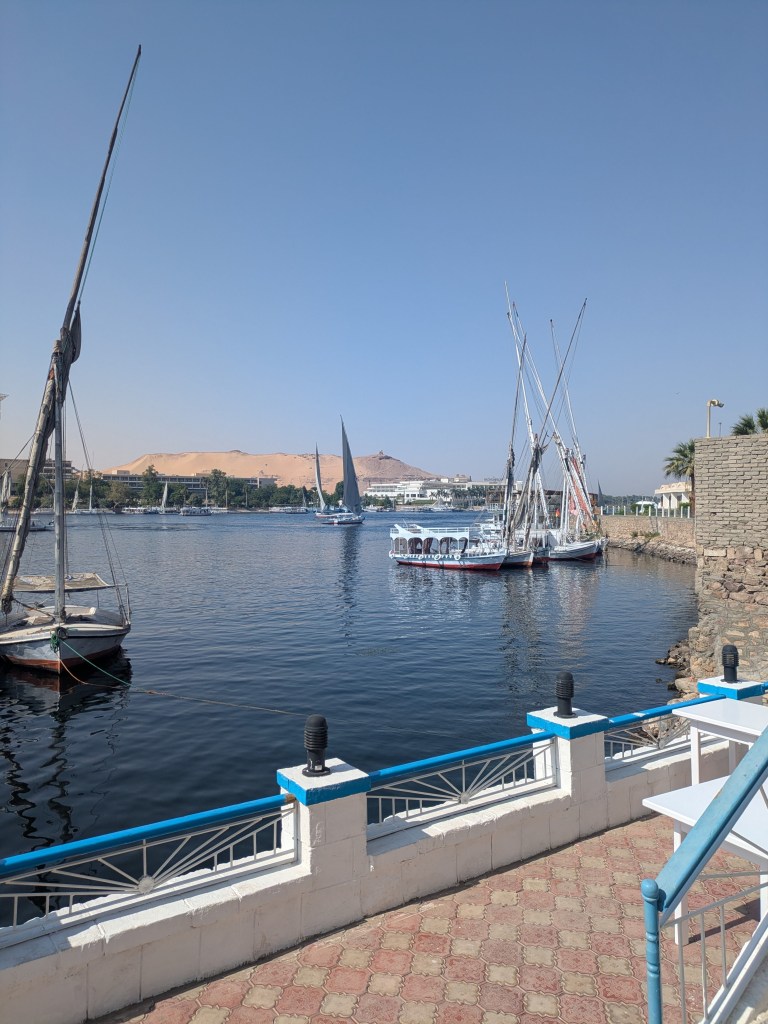
Aswan
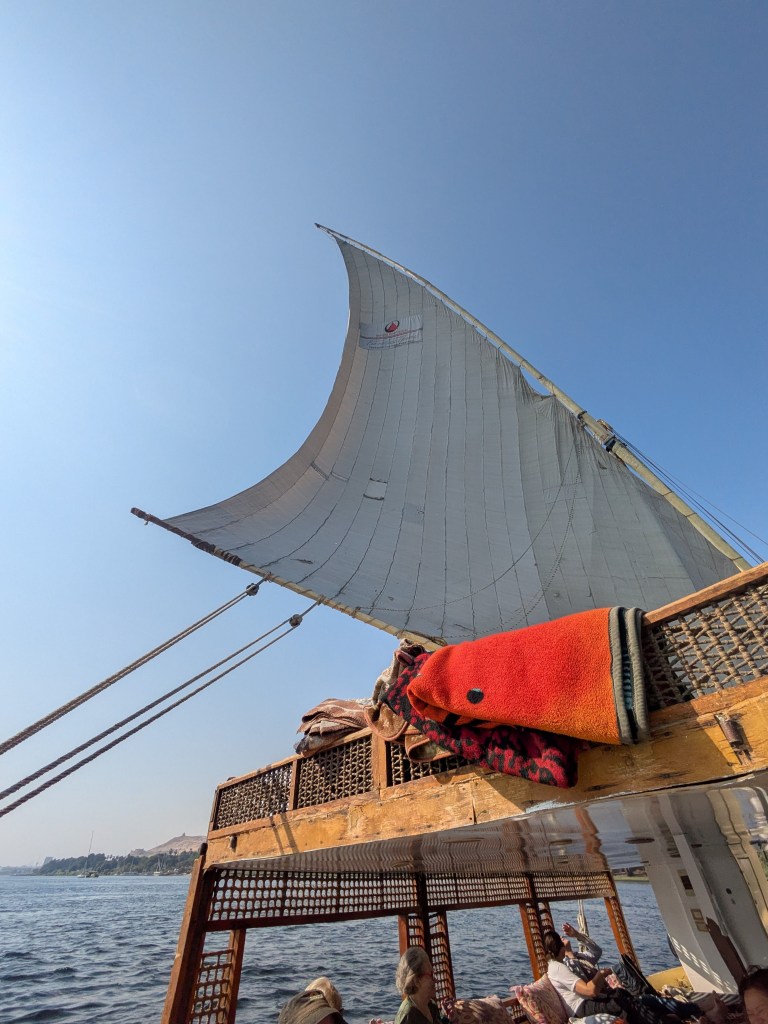
Felucca
The following day we headed to the Valley of the Kings, where Pharohs from the New Kingdom were buried (the pyramids were for Pharohs of the Old Kingdom). The colours inside the tombs and walkways were amazingly vibrant, especially in the tombs of Ramses V and VI. I also stepped inside Tutankhamun’s tomb – this was much smaller and simpler than a lot of the others, as he was only 19 when he died (the other Pharohs spent many years designing their own more elaborate tombs). Afterwards we visited Hatshepsut’s mortuary temple, carved into a rock face. She was a very successful female Pharoh, focusing on peace within the nation rather than military conquests with other nations, resulting in a very peaceful 20-year reign. Lastly we stopped by the Colossi of Memnon statues for some quick photos and then we had some downtime in the afternoon. I enjoyed a rest and sketched the view from my hotel room (take a look @alexaholroydart). In the evening we walked to nearby Luxor Temple which looked really striking all illuminated at night. It was great to experience a temple in a different way (and avoid the hot sun!). A large portion of the temple was buried under sand for many years, and we could see the evidence of this when our guide pointed out a door high up in a wall that was once an entrance to a mosque.
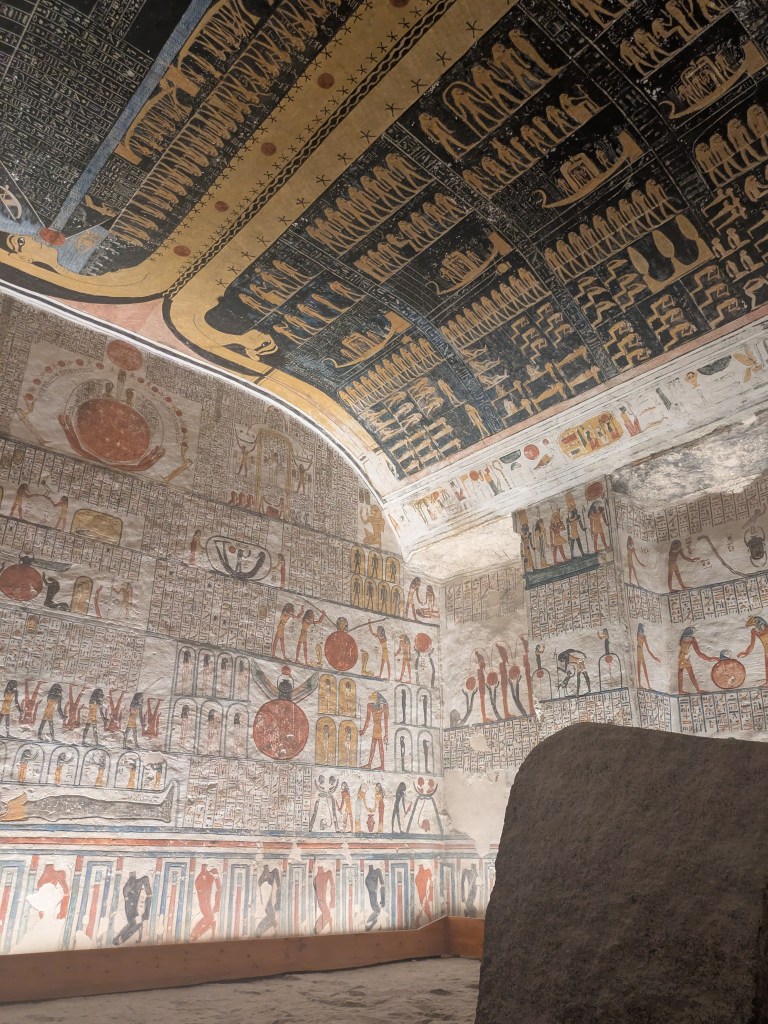
Valley of the Kings
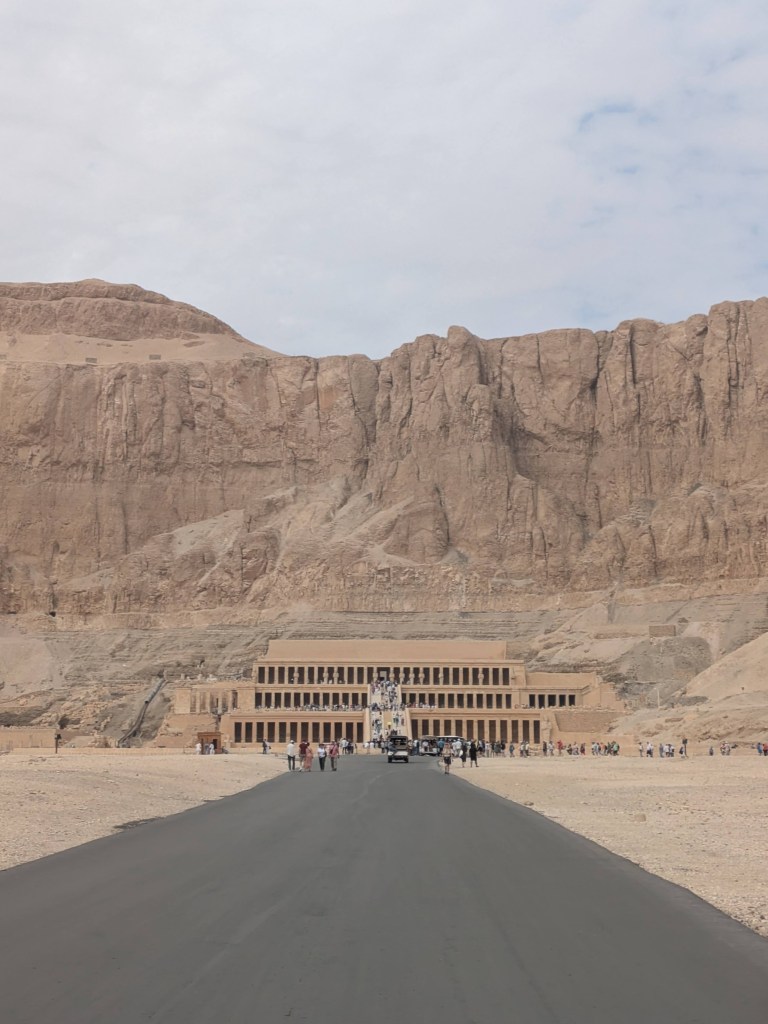
Hatshepsut temple
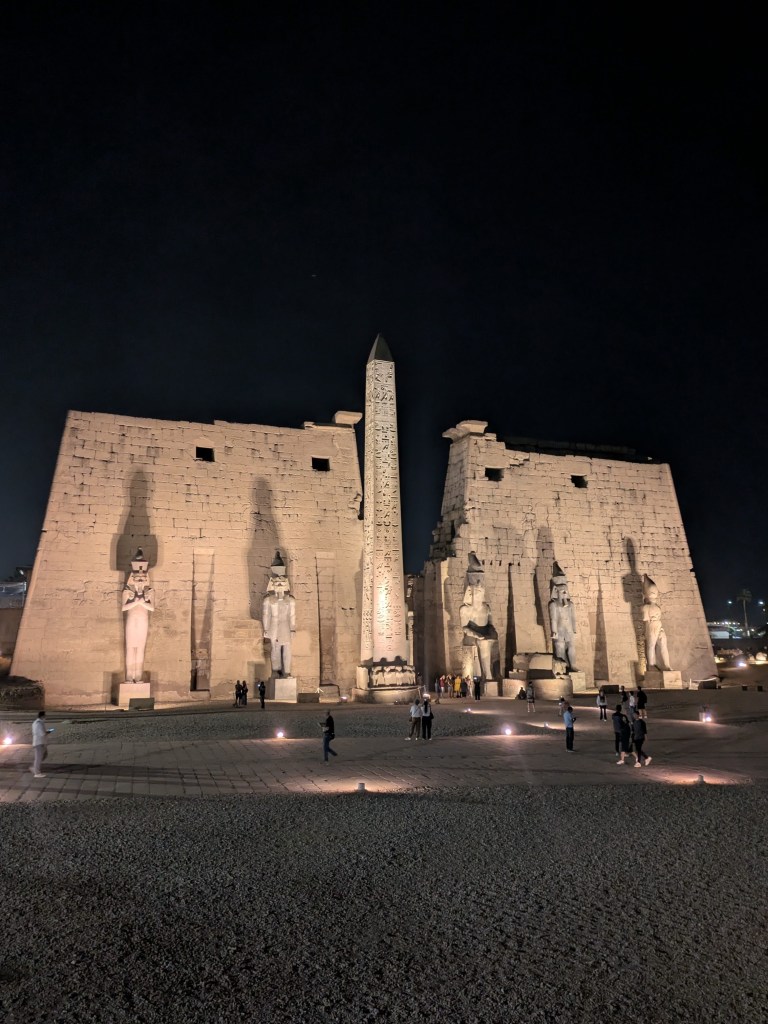
Luxor Temple
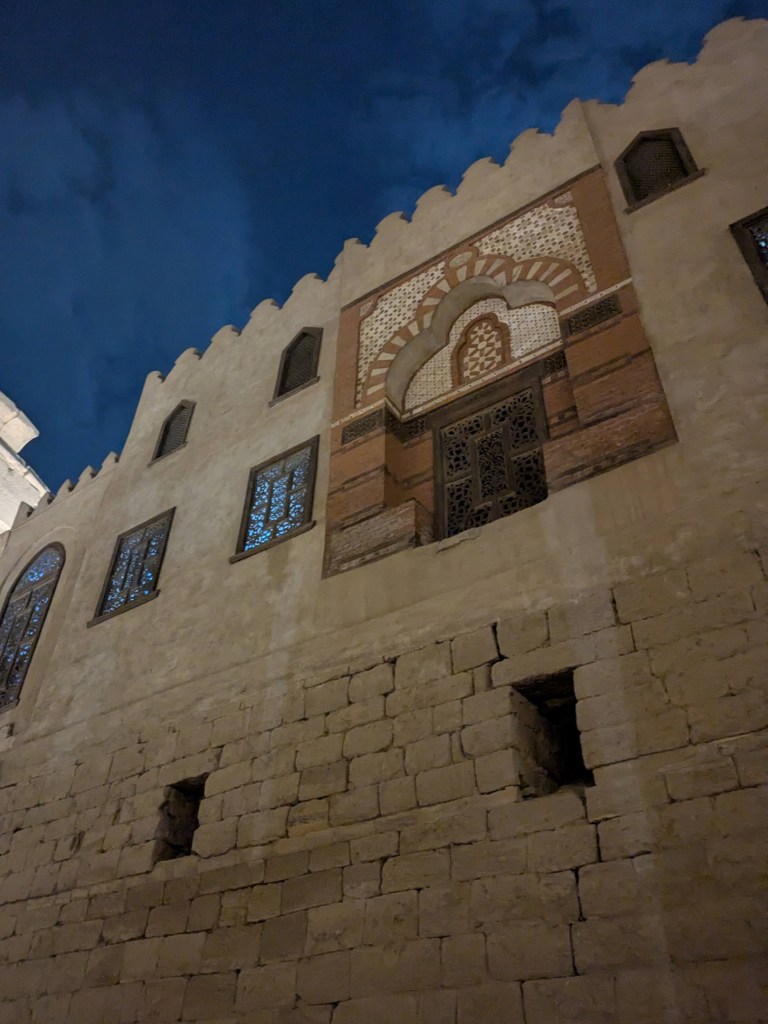
Luxor Temple
The next day we visited Karnak Temple which is the largest temple complex in Egypt, a completely awe-inspiring place with a multitude of columns and where various Pharohs had made multiple additions to the site. We also visited the Funtasia project which is partially funded by G Adventures and offers free classes to local children to develop various skills, and we did a short cycle ride around the local village. At dinner I tried fateer which is a thin pastry with a stuffing (I chose chicken and pepper), a bit like pizza and it was delicious! The typical meal that we ate the most consisted of flatbreads with tahini and baba ganoush to start, perhaps a vegetable soup, then potatoes and vegetables in tomato sauce, grilled chicken and rice. Black tea with a sprig of fresh mint was also popular along with fresh lemon and mint juice.
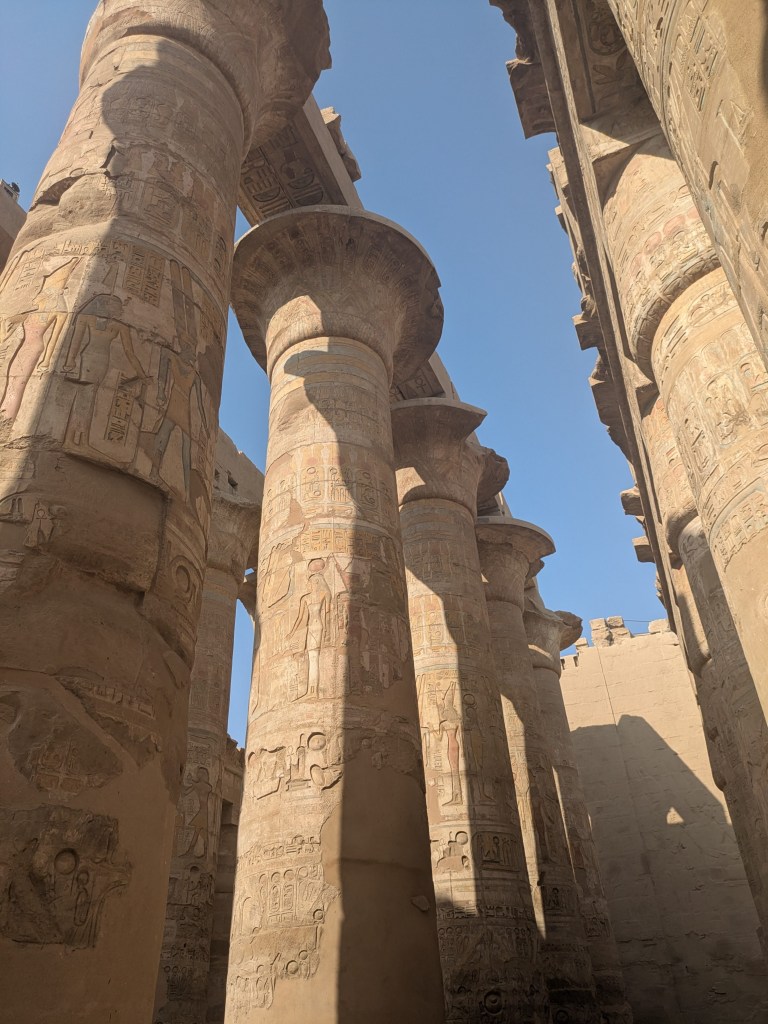
Karnak Temple
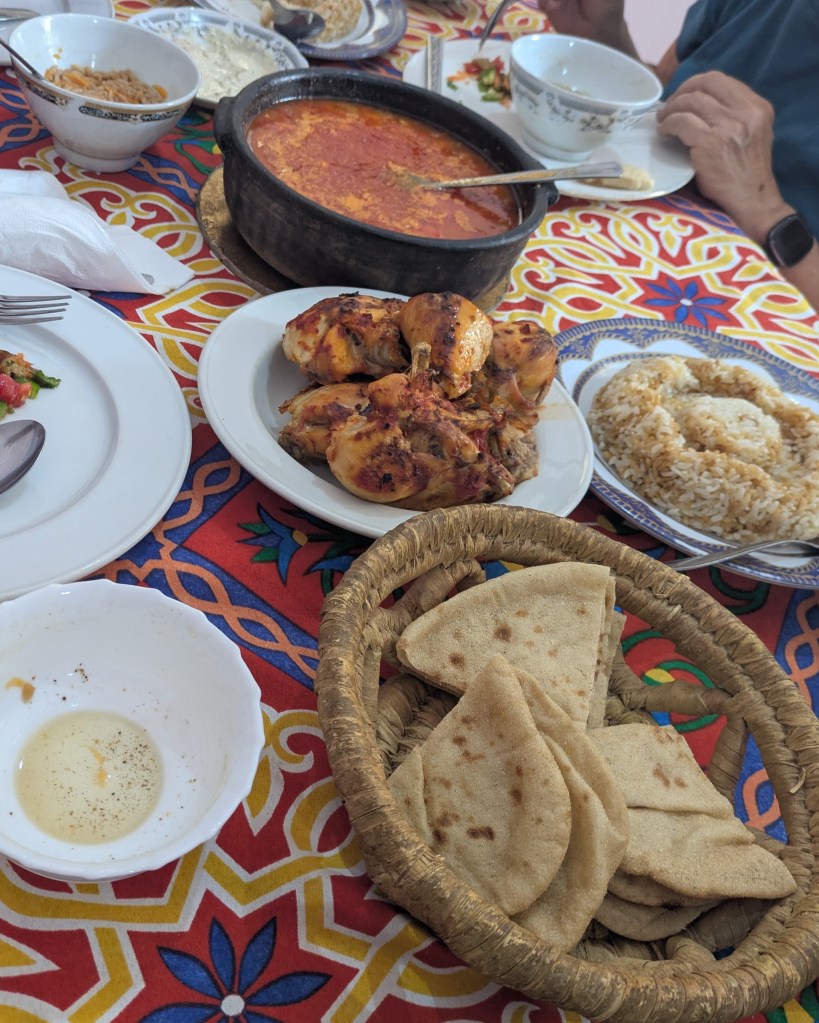
Typical Egyptian meal
On our final day we took a one-hour internal flight back up to Cairo, and some of the group then continued onto Jordan. I opted to explore Sakkara which has the oldest pyramid, the Step Pyramid of Djoser, built around 2700BC! Nearby, the Pyramid of Unas had the earliest known funerary texts, precursors to the Book of the Dead (all the hieroglyphics in the tombs essentially contain instructions for how the Pharohs can reach the afterlife), and further tombs contained hieroglyphics with rare scenes of daily life. We also visited the Memphis open air museum which had a large sphinx and some huge Ramses statues. I stayed a final night near to the airport and then flew back home to the UK the following morning.
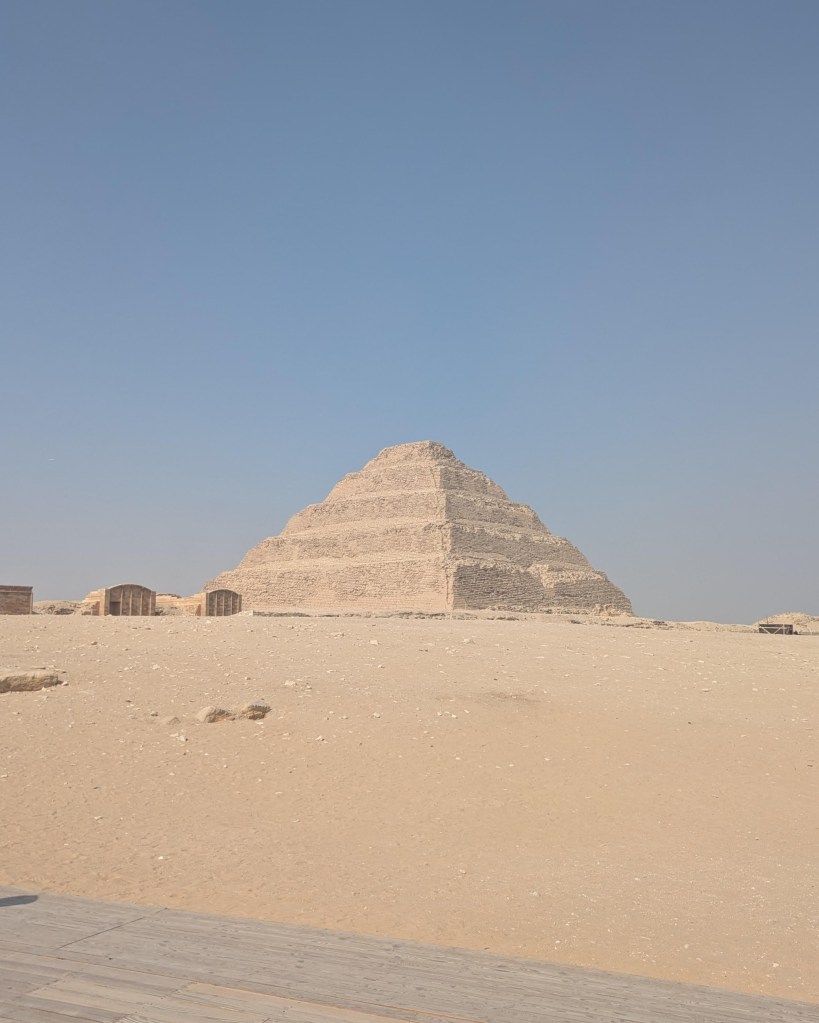
Step Pyramid of Djoser, Sakkara
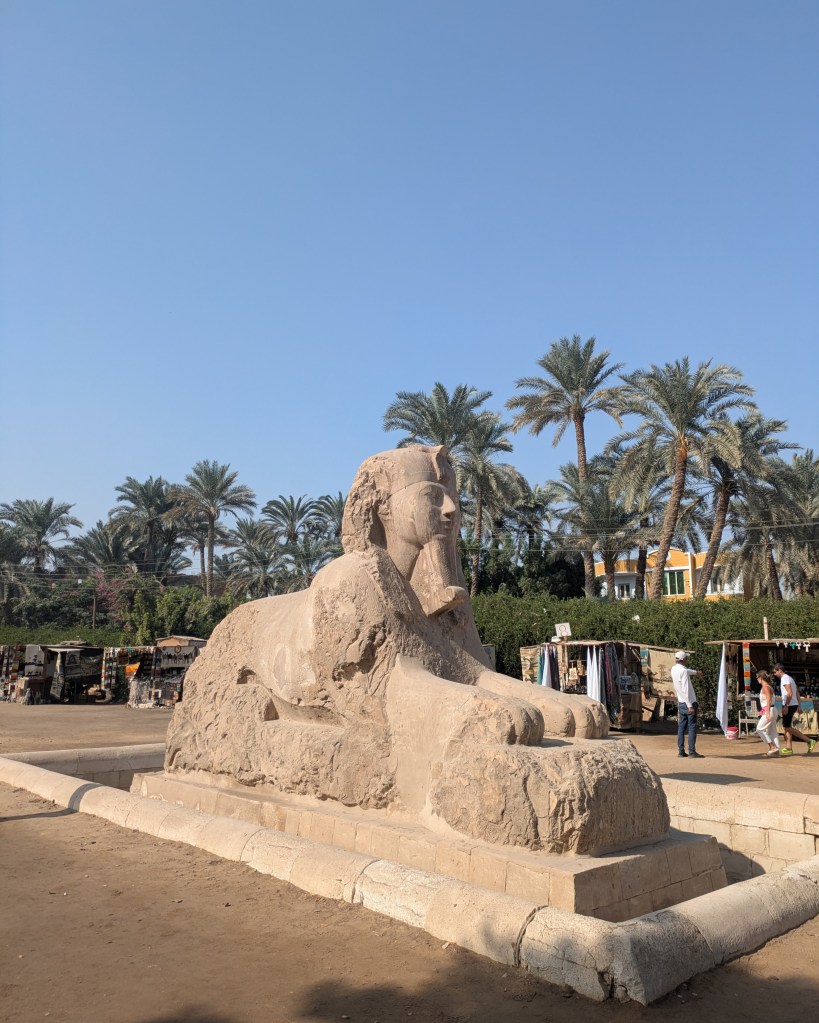
Memphis Open Air Museum
Egypt is a truly remarkable place full of awe-inspiring monuments, and it was so hard to comprehend how long ago everything had been built, and how fortunate we are that so much is still standing today. During our stay we also watched a live broadcast of the elaborate opening ceremony for the Grand Egyptian Museum. It had been partially open for a while but this celebrated the official full opening. Unfortunately we didn’t get a chance to visit it ourselves (access for the public kept being delayed) so I’d like to return to Egypt another time to visit as it looks pretty amazing, and I’d like to see some of the treasures from the tombs too.
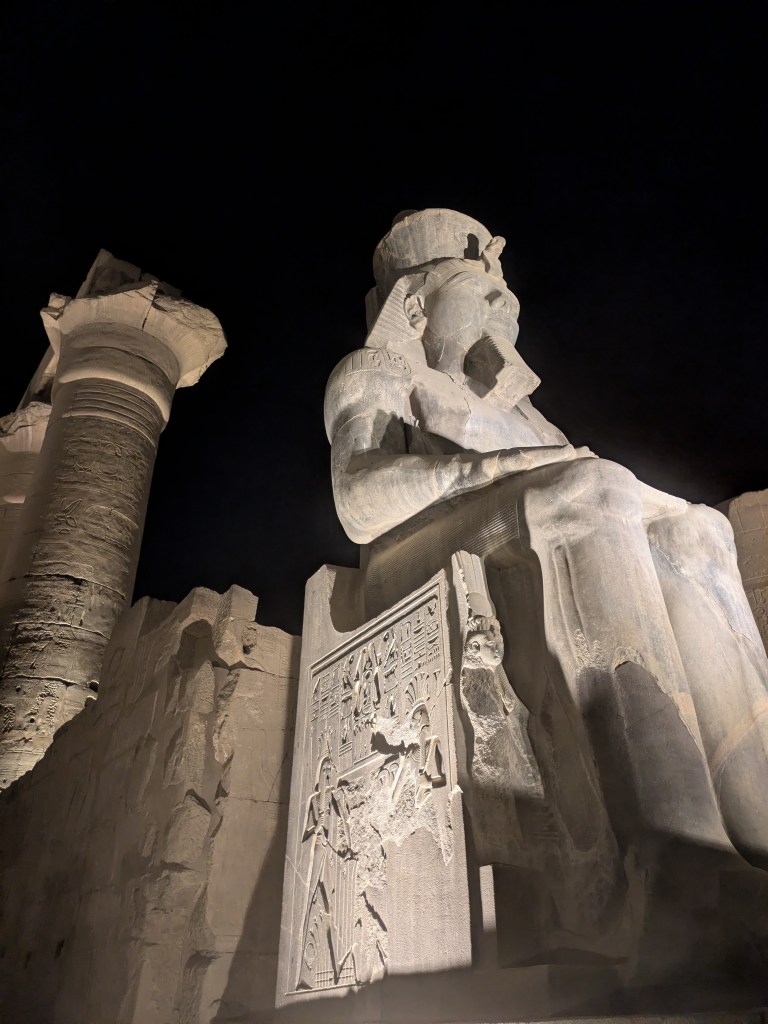
Luxor Temple
Lastly, some notes on practicalities in case you’re planning your own trip. Egypt is primarily a cash-based society and you can only bring a restricted number of Egyptian pounds into the country, so you’ll need to withdraw more cash from ATMs after arrival. Tipping is common practice and our guide organised a tipping kitty for the group which made things much easier – we all paid in an amount at the start and then our guide tipped everyone along the way on our behalf. It is not advisable to drink the tap water (even for the locals), so I purchased bottled water very cheaply from small local shops throughout the trip and even used it for brushing my teeth. I also avoided some fruit and raw vegetables in case they had been washed in the tap water, and I had no stomach upsets during the trip. Plug sockets were the standard European variety. A visa is required, which I tried to obtain online beforehand but the website kept crashing. I brought £25 GBP cash with me and had been expecting a queue at the airport, but my airport pickup sorted this for me so no queuing was required.
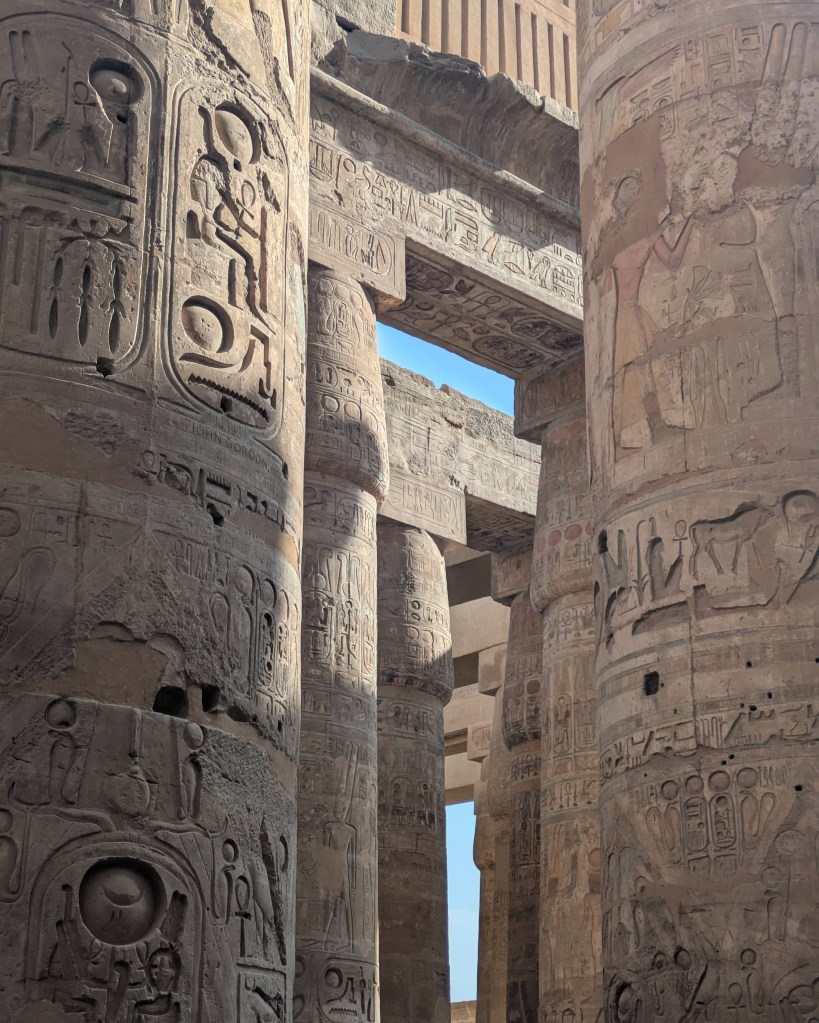
Karnak Temple
If you’re keen to see the historic Ancient Egyptian sites then I can highly recommend booking a group tour to explore, you definitely need a guide as a minimum when visiting. The river cruises also look like a lovely way to see the sights. At times the persistence of the vendors can feel overwhelming, but if you’re mentally prepared for this then there’s no reason why you can’t have as wonderful a time as I did.
Alexa
P.S. If you enjoyed reading this post, why not take a look at 30 Countries Before 30, Tips for Solo Travel and Solo Travel in Italy.
Header photo: Pyramids of Giza
 ALEXA ELIZABETH