Our daily surroundings can have a huge impact on our wellbeing, and I believe it’s really worth putting a little time and effort in to make the most of your interior and create a haven that you love spending time in. It’s also a wonderful opportunity for self-expression.
I’ve found that several of my friends, having been fortunate enough to purchase their first homes, have been slightly overwhelmed when faced with furnishing and decorating their own place for the first time. And after years of living in rentals with often unreasonable landlords it’s no wonder! The first step is to carefully consider your needs and your lifestyle, what do you need your space to do for you? How will you use it? Then take some time to consider your personal style. What types of interiors are you drawn to? A midcentury, eclectic, vintage vibe or a modern, minimalist, clean look? Cosy cottage charm or fresh Scandinavian design? Some people draw energy from bold interiors full of colour and pattern, while others prefer a calmer space with muted colours to help recharge.
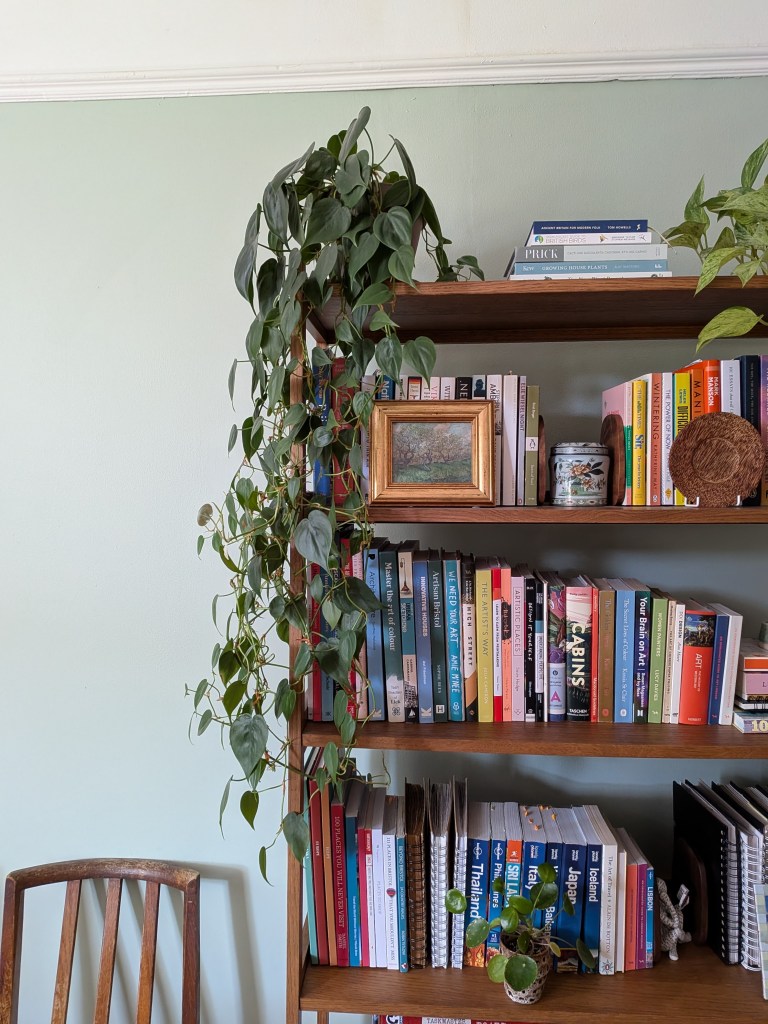
Curated bookshelves
Whatever you style may be (or evolve to be), there are some simple things you can do to create cohesion and visual interest in your home. I’ve collated 7 key pointers below to help elevate your space, whether it’s your first home or a rental.
Odd numbers – say you have a group of objects on a side table. A group of three (or an odd number) is usually the most visually appealing. For example, a candle, a vase and a bowl. Ensure they’re different heights too.
Contrast – adding contrast to a space creates dimension and visual interest, and can be achieved in multiple ways, such as through surfaces, styles, and textures. Combine soft and hard surfaces, contemporary and antique furniture, and patterned and plain furnishings. Add variation in the heights of furniture and artwork, in different types of wood, and with a mixture of light and dark colours.
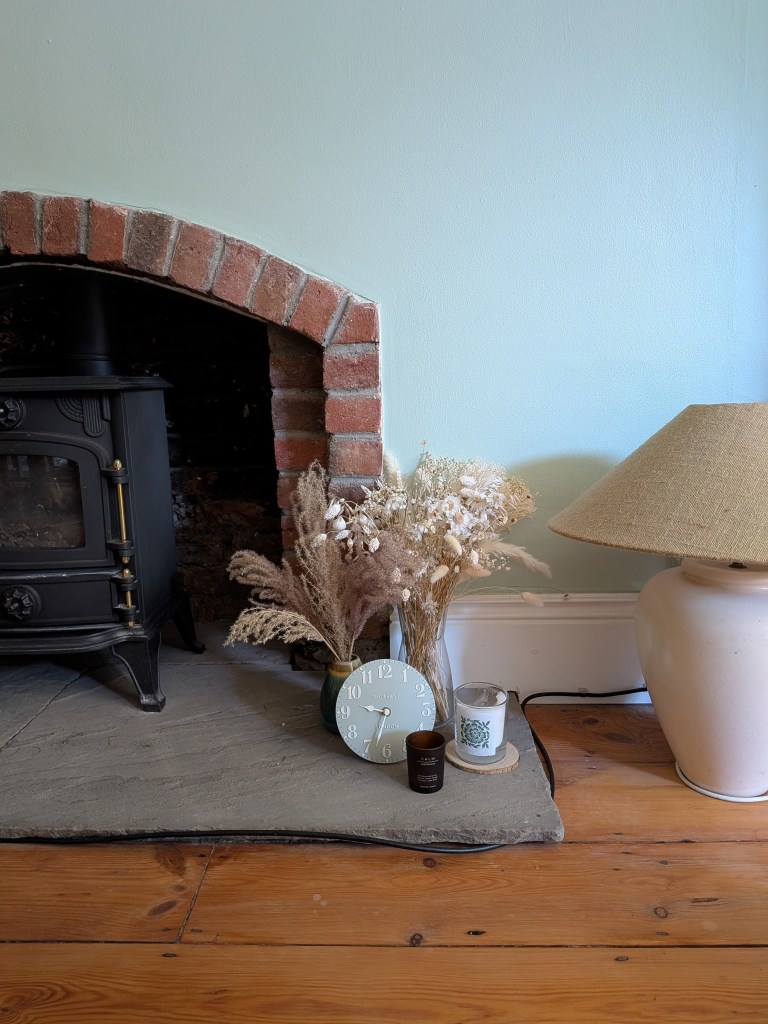
Use of odd numbers (group of 5)
Symmetry and asymmetry – symmetry can bring elegance and calm to a space, such as a pair of lamps or chairs. Asymmetry and irregularity can generate greater visual interest, for example by varying the sizes of cushions on a sofa. Irregularity can create a more relaxed, welcoming environment, for example through displaying handmade items, vintage furniture with patina (surface wear and tear), organic shapes and patterns, and natural materials.
Theme – consider a theme that can tie multiple rooms within your home together. This could be a colour, a material or a shape. Say you choose the colour green – ensure this colour appears in different forms both within and across multiple rooms. Perhaps there is a light green paint on the wall, a darker green in the cushion covers, and a sage green vase. Then in other rooms perhaps there are green elements within the artwork or lampshades.
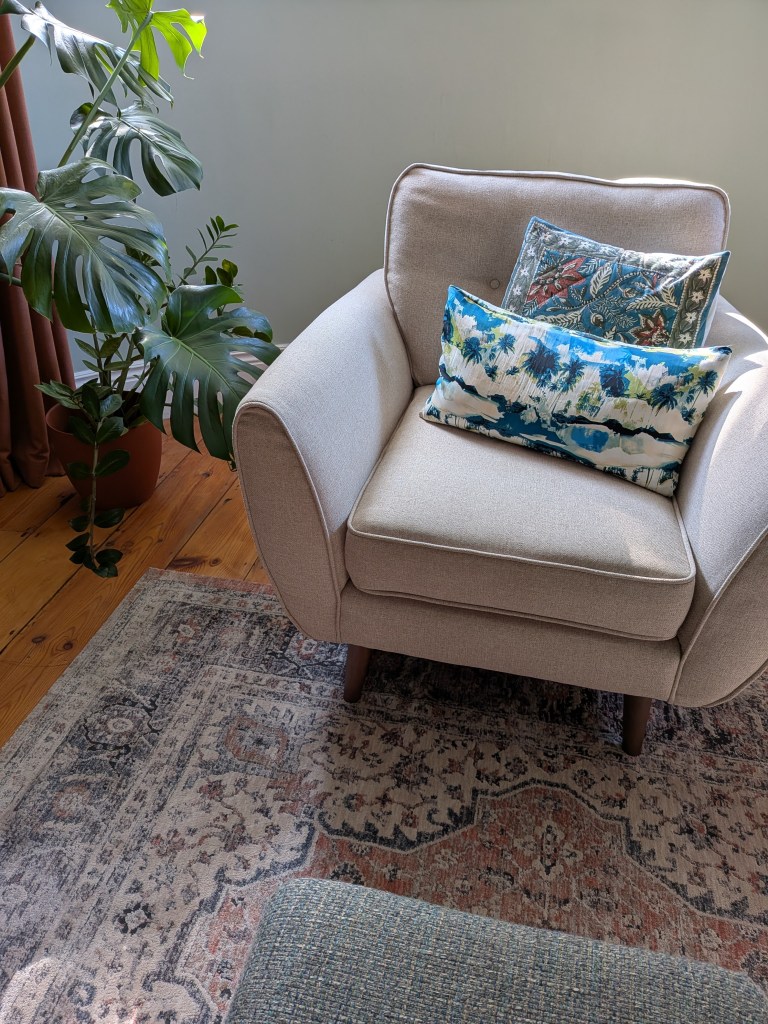
A thoughtful colour scheme
Colour scheme – this topic justifies a whole separate post. It’s worth choosing a reduced selection of colours to use repeatedly in different shades and tones throughout your home, to create a feeling of cohesion. If you’re stuck then consider looking to the natural world for inspiration, or within your own wardrobe for colours that sing to you. I love a mix of blues, greens and earthy terracotta and stone colours. A scheme should also include types of wood and other materials that you’ll use throughout.
Empty space – consider the use of negative space within a room to add balance. Lots of objects everywhere can be visually busy so ensure there are quieter areas too, for example one small artwork with a lot of space around it.
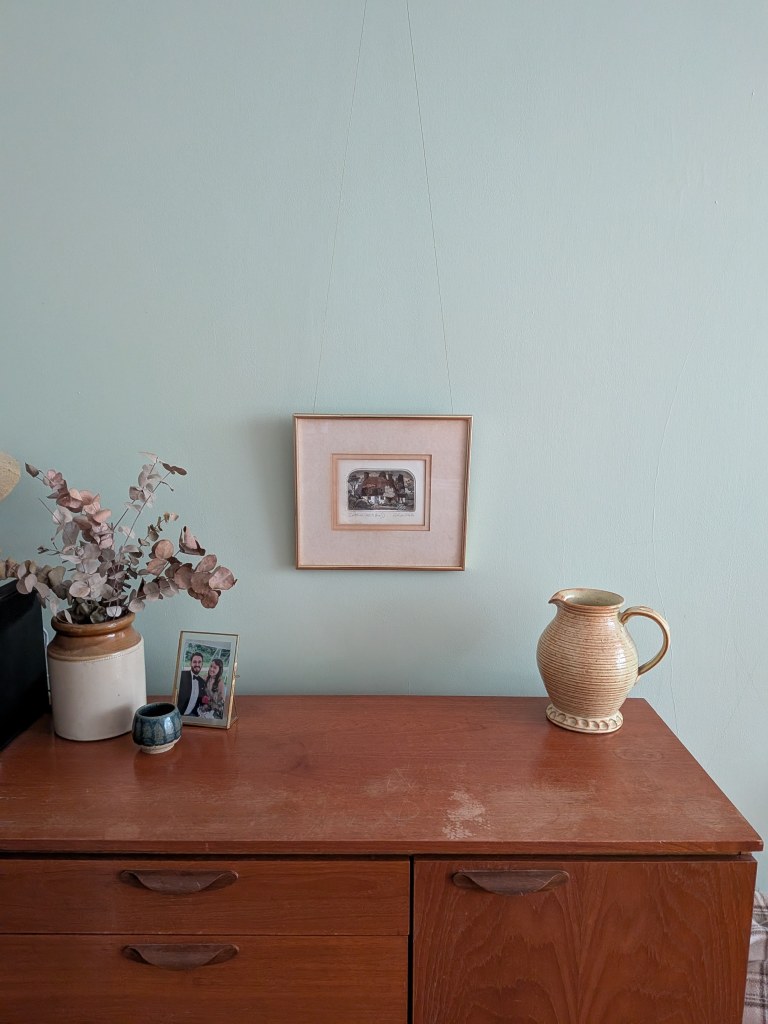
Use of empty space, vintage furniture with patina, odd numbers
Final checks – does your room have a focal point, such as a fireplace or stand-out piece of furniture? Are there interesting objects, such as something unusual you found at a flea market? Are there personal items, such as photographs of loved ones, inherited pieces or souvenirs? Lastly, are there natural pieces, such as houseplants, natural materials, cut or dried flowers, or objects with organic shapes?
I believe that a tidy home is great for your wellbeing too. When was the last time you had a good old sort-out or declutter? So many of us own more than we need which can result in thinking we need more storage or larger homes. Perhaps there are some items that no longer bring you joy which you could donate to charity. Everything you own needs a home within your space, and this will help keep things tidy.
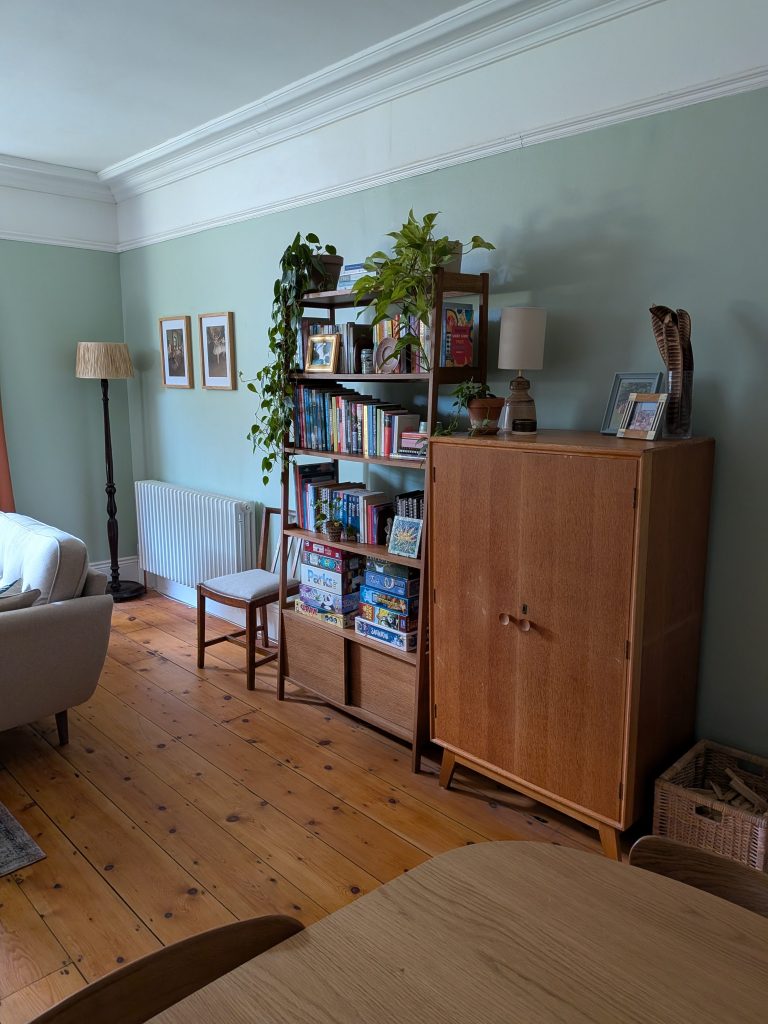
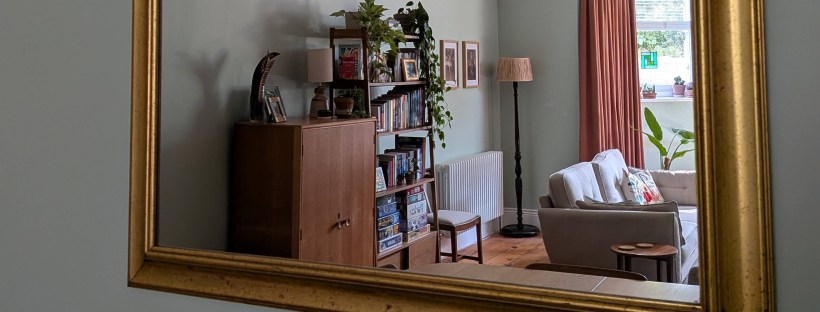
My living room
If you’d like to read more practical advice for interiors then I highly recommend ‘The Interior Design Handbook’ by Frida Ramstedt, where I’ve taken some of the above ideas from. It covers basic design principles, colour schemes, lighting and useful guidance such as hanging pictures, curtain length and choosing a rug size. I also recommend ‘Happy Inside’ by Michelle Ogundehin which has a great section about choosing a palette for your home.
I hope this post has given you some food for thought, and that there may be one or two elements you’ll take away to consider for your own home. If you have a space that you’re struggling to bring to life, I’d love to hear about it!
Alexa
P.S. If you enjoyed reading this post, why not take a look at Vintage Furniture Finds, Houseplants for Beginners and First Time Buyer Advice.
Header photo: my living room
 ALEXA ELIZABETH